Home › Advice › Florida 4-Point Inspection: What It Covers, Who Needs It, How to Prepare
Florida 4-Point Inspection: What It Covers, Who Needs It, How to Prepare
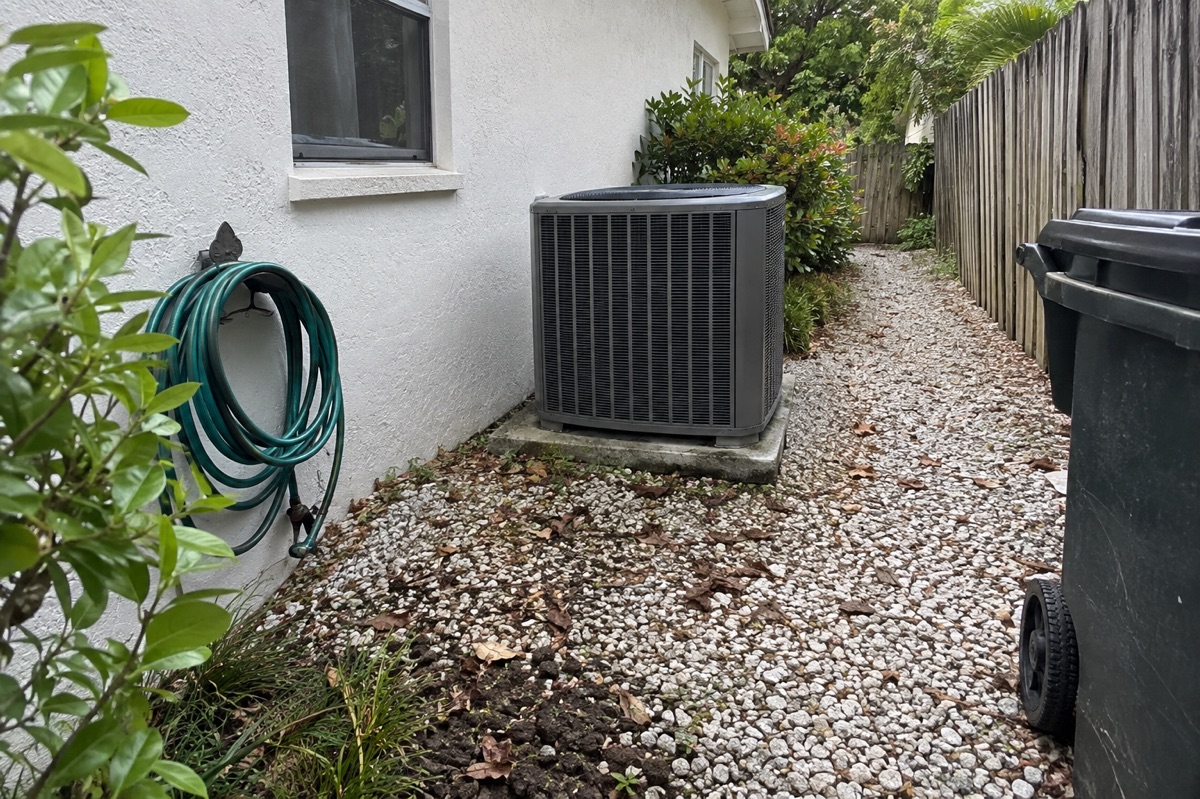
A 4-point is a short check of the roof, wiring, pipes, and heating and cooling for your insurer. A Florida-licensed pro fills in a form, takes photos, and signs it. Your insurer uses it to decide whether to write the policy. Citizens, Florida's state-created insurer, requires one when you apply to insure a home more than 20 years old. It is not a home inspection. It is not a wind mitigation inspection either. Here's what the form asks, what can block a policy, and how to get ready.
Who needs one
Citizens requires a 4-point when you apply to insure a home more than 20 years old. Citizens says that covers property owner, dwelling, and mobile home applications. It does not apply to tenant or condo policies. The age was 30 until February 1, 2022. The report must be from the past year.
Other insurers set their own rules. Universal's 2018 guide asked for one on homes older than 40 years. Florida's Insurance Consumer Advocate says the report generally must be dated within 30 days before you apply, but each company sets its own window. So ask your agent two things before you book. Which form? How recent?
You usually pay for it. Florida's consumer page says the applicant pays. The Consumer Advocate's guide says a stand-alone 4-point may cost $100 to $300 and take about an hour. Prices vary by inspector and region.
Who can do it
Citizens accepts a form signed by a Florida-licensed pro it can verify. That includes a general, residential, or building contractor. It also includes a building code inspector or a home inspector. A licensed architect, engineer, or building code official can sign too. A trade pro may sign only their own section. An electrician, for example, signs only the wiring part.
Check the license before the visit with the license lookup steps. The state's consumer guide says the same.
What the form asks
We use Citizens' sample form as the example. Florida's Consumer Advocate says insurers' 4-point requirements are generally similar, with slight variations. Citizens' form says any other report sent to it must have at least this much detail.
Wiring. Is the panel breakers or fuses? How many amps, and is that enough? Is there cloth wiring, live knob-and-tube, or aluminum branch wiring? Single-strand aluminum needs separate repair papers, certified by a licensed electrician. The hazard list: blowing fuses, tripping breakers, empty sockets, loose wiring, bad grounding, corrosion, over-fusing, double taps, exposed wiring, unsafe wiring, wrong breaker size, and scorching. Panel age, year updated, brand and model. Photos of the open panel door with its label, and of the panel with the cover off.
Heating and cooling. Central air, yes or no. Central heat, or the main heat source and fuel. Does it work? Date of last service. A wood stove or gas fireplace, and whether a pro installed it. A space heater as the main heat. Blockage or leaks at the drain line or pan. System age, and a photo of the dated maker's plate.
Pipes. Is there a relief valve on the water heater? A photo of it. Any active leak? Any past leak? The condition of each fixture and hookup. Pipe types, with copper, PVC or CPVC, galvanized, cast iron, polybutylene, ABS, and PEX listed. Are the supply and drain lines original, fully re-piped, or partly re-piped? Water heater age. Photos of the water heater, under-sink pipes, and exposed valves.
Roof. Covering, age, and years of life left. Date of the last roof permit. Full or partial replacement, and what percent. Visible damage: cracking, curling, granule loss, exposed asphalt or felt, missing or cracked tabs or tiles, soft spots, and hail. Visible leaks in the attic or on ceilings. Photos of each slope. With those photos, this section can replace Citizens' separate roof form.
Red flags that can block a policy
The form tells agents not to submit a home with wiring, heating, or plumbing that isn't in good working order, or that has hazards. From the form and Citizens' public FAQs, these can stop a Citizens application:
- Less than 100 amps. Citizens requires 100 amps on new applications.
- Single-strand aluminum wiring with no accepted repair. Citizens accepts a full copper rewire, COPALUM, or AlumiConn, with certified papers. See the aluminum wiring guide.
- Any hazard on the list above, like double taps, scorching, or exposed wiring. A breaker that keeps tripping is on that list. The breaker guide explains why it belongs there.
- Polybutylene pipe in a home more than 20 years old. See the polybutylene guide.
- An active leak or unrepaired water damage. If the water heater drips, start with the water heater leak steps.
- A roof past Citizens' age limits without proof. Shingle roofs over 25 years need proof. So do tile, slate, clay, concrete, or metal roofs over 50 years. Citizens asks for proof of a full replacement, or documents showing at least five years of life left for its underwriters to review.
Some private insurers publish rules we did not find in Citizens' public FAQs. Universal's 2018 guide, for example, listed fuses, some panel brands, portable space heaters, and no working AC as reasons to say no. The panel brand guide covers the brand question. Ask your agent for the current list.
One roof rule works in your favor. Florida law says an insurer may not refuse to sell or renew a homeowners policy just because of roof age when the roof is under 15 years old. If it's 15 or older, the insurer must let you pay for a roof inspection by an inspector it approves before it requires a new roof. If that inspection shows at least five years of life left, age alone can't be the reason. This law covers homeowners policies. It doesn't cover mobile home policies.
How to prepare
- Gather permits and bills for the roof, panel, re-pipe, water heater, and AC. Note the year of each.
- Read the water heater and AC labels for their dates. Don't open anything.
- Have licensed pros fix known leaks and hazards first. Keep the bills.
- If aluminum wiring was repaired, find the electrician's certified papers.
- Clear a safe path to the panel, water heater, attic hatch, and AC. Don't move anything heavy, and don't climb.
- Don't hide a problem. The inspector signs that the form is true and correct.
- Book the 4-point after your agent confirms the form and how recent it must be. Keep a copy and the photos.
Three stop lines. Don't remove the panel cover or touch wiring. The inspector takes those photos. Don't climb on the roof. Don't test or open the water heater's relief valve. Hot water can burn you.
Three inspections, three jobs
| 4-point | Home inspection | Wind mitigation | |
|---|---|---|---|
| For | Your insurer | A buyer or owner | Your insurer, for discounts |
| Covers | Roof, wiring, pipes, heating and cooling | Readily accessible systems, from structure to site, by limited visual exam | Roof covering, deck nailing, roof-to-wall ties, roof shape, water barrier, opening protection |
| Form | Citizens' sample form or similar | The inspector's report | State form OIR-B1-1802, effective April 1, 2026 |
| Decides insurability? | Helps the insurer decide | No | No. It supports discounts |
| Good for | Within a year at Citizens; others vary | That day's observations | Up to five years with no material changes or errors on the form |
InterNACHI's standard says a home inspection does not determine insurability. Florida law defines it as a limited visual exam of readily accessible systems, from the structure to the site. A wind mitigation form lists storm-resistant features for discounts. At Citizens, those discounts apply only to the wind part of the premium. The wind inspection checklist covers the 2026 form.
Put your build year and state into the free House Decoder to see which of these flags were common for homes built then.
If the report has a flag
Ask your agent what the exact blocker is and what proof clears it. Then work in this order. Safety first, with a licensed electrician for any wiring hazard. Leaks next, with a licensed plumber. Then the roof proof, if age is the issue. Then an updated form or a new visit. Keep every bill. If one insurer says no, another may say yes. The form says the report is used only to decide insurability, and it warns that it isn't a warranty on any system.
Quick answers
- Who needs a 4-point inspection in Florida?
- Citizens requires one on applications for homes more than 20 years old, and the report must be from the past year. Other insurers set their own age rules and time windows. Ask your agent which form and how recent.
- What fails a 4-point inspection?
- There is no overall pass or fail score. The inspector marks each system's condition, lists hazards, and adds photos, and the insurer decides. Citizens' sample form says agents may not submit homes with electrical, heating, or plumbing systems not in good working order or with hazards. Citizens also won't accept single-strand aluminum branch wiring without an accepted repair, and won't write a new policy on a home more than 20 years old with polybutylene pipe.
- Is a 4-point the same as a home inspection or a wind mitigation inspection?
- No. A home inspection is a wider visual exam for a buyer or owner and does not decide insurability. A wind mitigation inspection documents storm-resistant features for discounts on state form OIR-B1-1802. A 4-point reports four systems so an insurer can decide whether to write the policy.
Keep your home plan moving
Get the free Seasonal Home Maintenance Schedule
A seasonal checklist for your roof, gutters, HVAC and more, plus practical homeowner tips. Adjust the schedule for your climate and equipment.
We don't sell your email address. See our privacy policy.
Sources
- Insurance Inspections (4-point, roof, and wind mitigation) — Citizens Property Insurance Corporation
- Four-point inspection requirements (FAQ 1394, updated February 18, 2026) — Citizens Property Insurance Corporation
- 4-Point Inspection Form (sample form Insp4pt 03 25) — Citizens Property Insurance Corporation
- 2022 rates and rules changes including 4-point required for 20-year buildings (bulletin of December 3, 2021) — Citizens Property Insurance Corporation
- Roof and 4-Point Inspection Form Updates (bulletin of March 20, 2025) — Citizens Property Insurance Corporation
- Does Citizens require a plumbing inspection? (FAQ 1360, updated February 25, 2026) — Citizens Property Insurance Corporation
- Is aluminum branch wiring acceptable? (FAQ 1550, updated April 16, 2026) — Citizens Property Insurance Corporation
- Minimum amperage requirement (FAQ 2865, updated August 25, 2026) — Citizens Property Insurance Corporation
- Will Citizens insure dwellings with polybutylene pipes? (FAQ 1713, updated January 26, 2026) — Citizens Property Insurance Corporation
- Roof age documentation (FAQ 2513, updated March 17, 2026) — Citizens Property Insurance Corporation
- Wind mitigation discounts (FAQ 2516, updated September 22, 2026) — Citizens Property Insurance Corporation
- What to Expect: Four-Point Inspection (Insurance Consumer Advocate guide developed with InterNACHI) — Florida Department of Financial Services
- Homeowners Insurance Overview — Florida Department of Financial Services
- 2026 Florida Statutes 468.8311 (home inspection services defined) — Florida Senate
- Home Inspection Standards of Practice (revised October 2022) — International Association of Certified Home Inspectors
- 2026 Florida Statutes 627.7011 (roof age and homeowners policies) — Florida Senate
- Wind Mitigation Resources (form OIR-B1-1802 effective April 1, 2026) — Florida Office of Insurance Regulation
- Uniform Mitigation Verification Inspection Form OIR-B1-1802 (Rev. 04/26) — Florida Office of Insurance Regulation
- 2026 Florida Statutes 627.711 (uniform mitigation verification form and authorized inspectors) — Florida Senate
- Florida Underwriting Binding Guidelines (10-24-18 edition) — Universal Property and Casualty Insurance Company