Home › Advice › Hiring Contractors › How to Check a Contractor's License Before You Hire
How to Check a Contractor's License Before You Hire
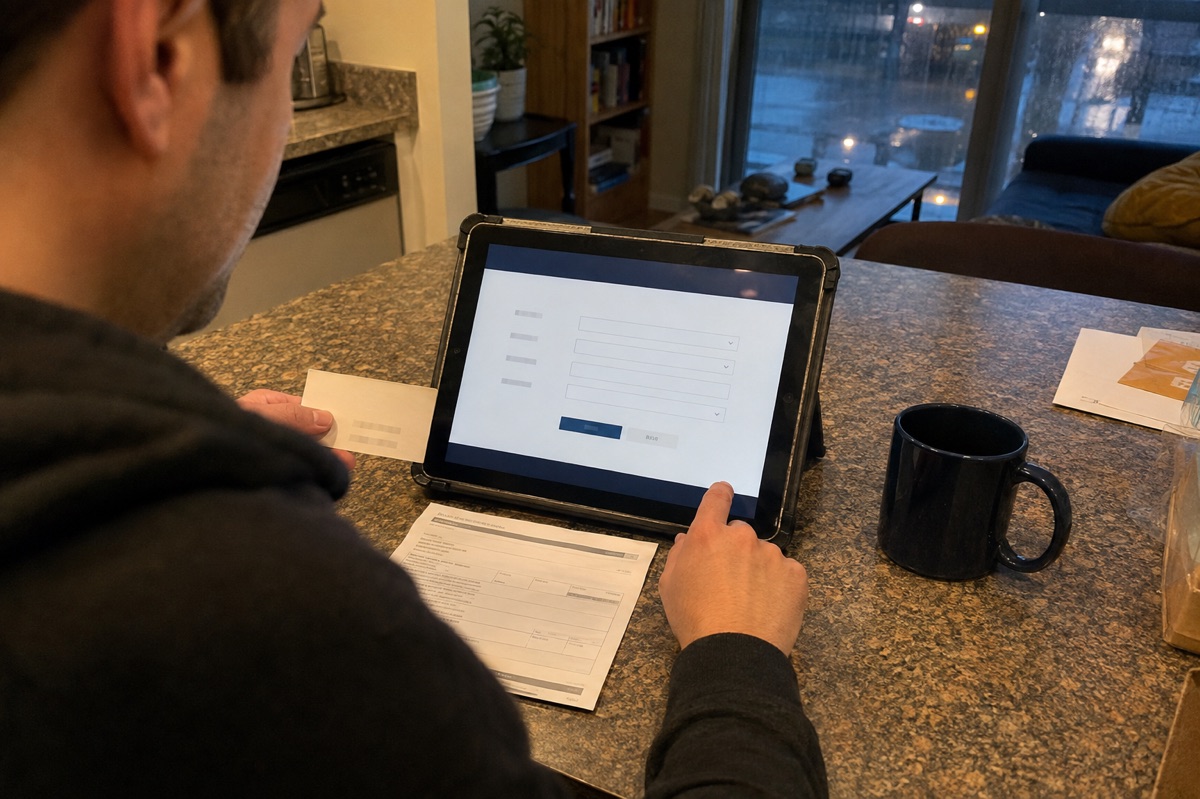
Check a contractor's license in the official state or local record before you sign or pay. Match the record to the business on your quote. Then check that the license covers the work and is active. This is a useful first screen, not a guarantee of skill, insurance coverage, or honest work.
Get the identity before opening the search page
Ask for the legal business name, license number, address, and name of the person in charge. Put those beside the quote. A truck logo or business card is not enough.
Save the search result with the date. Look for these items:
- The license number matches the one you were given.
- The business or qualified business matches the contract.
- The status permits the work now.
- The work type fits the job you want done.
- Any listed limits or discipline are clear to you.
If the names differ, ask why. A trade name can differ from a legal name, but you need proof of the link. Do not guess that two similar names are the same firm.
Florida: use DBPR and check the business link
Open the Florida DBPR license search. Search by license number if you have it. Then compare the name, status, license type, and business details.
Do not stop at a result that says the person has a license. Check that the right business is tied to that license. A salesperson may give you someone else's number.
If the record is inactive, expired, or unclear, pause. Ask DBPR whether that status and license type allow this work at your address. Local permit rules still matter. Ask the building office who will pull the permit and which trade license the job needs.
Keep the reply with your quote. A record checked months ago is not proof of today's status.
California: check the class and workers compensation
Use the CSLB license check. Review the class of work, bond, workers compensation entry, and any disclosed discipline. Read the board's notes on what its records do and do not show.
A key roofing rule is easy to miss. California C-39 roofers must have workers compensation insurance or approved self-insurance, even if they have no employees. The current CSLB guidance lists other classes with this rule too.
Do not accept “I work alone” as the answer for a C-39 roofer. Ask CSLB about a missing or conflicting record before hiring. For other trades, check the rules for that exact license class rather than applying the roofing rule to everyone.
Texas: know what a roofing credential means
Texas has no state roofing license. The RCAT licensing program is a voluntary trade-group credential. It is not state approval or a promise that a job will go well.
Other trades may need state licenses. Cities may also have permit or registration rules. Ask the local building office about the exact work, not just whether the firm is “licensed.”
The Texas Department of Insurance advises checking contractors and written terms after storms. Use the same care with a local business and an out-of-state crew. An address alone does not prove or disprove good work.
Check insurance separately from the license
Ask for current proof of liability coverage and the workers compensation coverage that applies to the crew. Contact the insurer or agent through a number you find independently. Ask whether the policy is current and what work it covers.
A certificate is not the whole policy. It does not guarantee that every loss or worker is covered. For a large or unusual job, ask your own insurance agent about gaps before work starts.
Also ask who will actually arrive: employees, subcontractors, or both. Put that answer in the job file. A clean license search does not settle these questions.
Finish with job-specific proof
Ask for recent work like yours and call references. For metal roofs, use our system-specific roofer questions. A license is a starting point; the exact roof system still matters.
Then compare the written scope and payment terms. If storm damage is involved, read the roof claim steps before signing claim-related papers.
Pause if the contractor refuses to resolve a name, license, or insurance mismatch. Save your notes and contact the regulator. It is better to have one clear answer before a deposit than several excuses after it.
Quick answers
- Does an active license prove a contractor does good work?
- No. It helps show legal status for the licensed work. You still need to check job experience, references, insurance, permits, and the contract.
- Does Texas have a state roofing license?
- Texas does not have a state roofing license. The RCAT credential is voluntary and is not a state license. Check local requirements, insurance, and experience too.
- Can a California roofer have no workers compensation because there are no employees?
- A California C-39 roofing contractor must have workers compensation coverage or approved self-insurance even with no employees. Check the current CSLB record and ask the board about any mismatch.
Keep your home plan moving
Get the free Seasonal Home Maintenance Schedule
A seasonal checklist for your roof, gutters, HVAC and more, plus practical homeowner tips. Adjust the schedule for your climate and equipment.
We don't sell your email address. See our privacy policy.
Sources
- Florida license search — Florida Department of Business and Professional Regulation
- California contractor license check — California Contractors State License Board
- Workers compensation requirements — California Contractors State License Board
- Signs of a contractor scam — Texas Department of Insurance
- Texas voluntary roofer licensing program — Roofing Contractors Association of Texas