Home › Advice › Roof Insurance Claims: Safe Steps After a Storm
Roof Insurance Claims: Safe Steps After a Storm
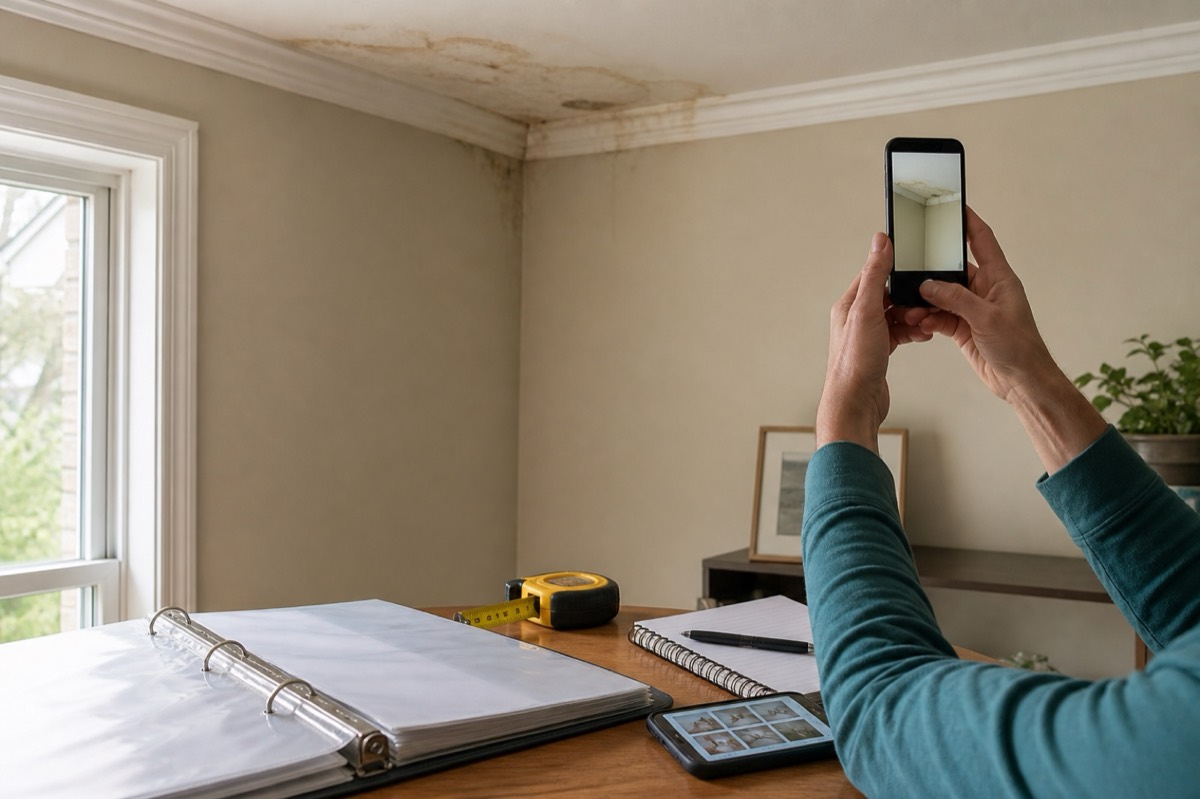
After roof damage, keep people safe, report the loss promptly, and save clear records. Stay off the roof. Do not enter a damaged attic to get better photos. A careful file can help explain your claim, but it cannot make an uncovered loss payable.
Make the area safe before you document it
Keep clear of fallen wires, loose roof parts, and sagging ceilings. Leave a damaged area if you suspect collapse or an electrical hazard. Call emergency services for an immediate threat. Do not touch wet electrical gear or stand in water to reach a switch.
After flooding or major storm damage, follow local reentry orders. The CDC's reentry advice calls for checks of structural and electrical hazards. A photo is not worth entering an unsafe home.
Have a qualified crew handle roof access and any tarp. Do not climb up to stop a leak yourself. Our roof leak first steps can help you plan the call for help.
Save what you can see from a safe place
Take dated photos from the ground or a safe room. Get a wide view first, then a closer view with the camera zoom. Do not move under a bulging ceiling for a close-up.
Start one folder with these items:
- Photos before the storm, if you have them.
- Photos of new damage and the date you saw it.
- Your policy number and claim number.
- A short note on what happened, without guessing the cause.
- Receipts for urgent work and damaged items.
- The name and date of each person you speak with.
The NAIC claim guide explains why photos, lists, and receipts help. If records were lost, say so. Do not fill gaps with made-up prices or dates.
Report promptly and separate urgent work from full repairs
Ask the insurer how to report the loss and which deadlines apply. Find out whether it wants to inspect before permanent repairs. Write down the answer.
At the same time, arrange safe steps to limit more damage. Do not wait for a final settlement while a hazard gets worse. Keep that emergency scope clear: what will be done, what it costs, and what will be saved as proof.
Before a full roof contract, get a written bid. Compare it with the insurer's repair scope. Use our roof quote guide to spot gaps in materials, permits, and cleanup.
Read the claim payment, not just the total
Use the NAIC's roof payment explainer as a starting point. Ask the adjuster to explain these terms in your own policy:
- Deductible: the part of a covered loss you bear.
- Actual cash value: a value that may subtract for age and wear.
- Replacement cost: coverage based on replacement, subject to policy terms.
- Depreciation held back: money that may be released after proof of repair.
Not every policy pays in the same way. Ask what proof releases any held-back amount and when it is due. Also check the limit and deductible for the kind of storm involved.
If the roofer finds hidden damage, ask for photos and a written added scope. Send it to the insurer for review. Hidden damage is not automatically covered; wear, old leaks, or exclusions may matter.
Watch for claim-rights and fee traps
In Florida, assignment of post-loss benefits is barred for residential and commercial property policies issued or renewed on or after January 1, 2023. The state's AOB guide explains this policy-date rule. Do not treat an assignment as normal paperwork.
Florida also restricts certain roofing offers and referral payments. These include giving a homeowner value for allowing an inspection or filing a roof claim. A roofer is not allowed to act as a public adjuster without the required license.
A promise to hide or waive your deductible is a reason to stop and check with your insurer or state insurance office. Do not sign a bill that falsely reports what you paid.
Close the job with proof, not a promise
Check the contractor's license and business identity before hiring. Keep a written contract and payment plan separate from the claim estimate.
At closeout, collect the final invoice, permit signoff where required, warranty terms, and repair photos. Send the insurer the proof it asked for. Keep copies rather than handing over your only set.
If you disagree with a claim decision, ask for the reason and policy language in writing. Your state insurance office can explain complaint options. Good records support a review; they do not guarantee a larger check.
Quick answers
- Should I call the insurer before getting emergency help?
- Safety comes first. Leave unsafe areas and get emergency help when needed. Report damage promptly and arrange safe temporary protection. Do not wait for a final claim decision to address an urgent hazard.
- Does replacement cost mean the insurer pays the whole roof bill?
- No. Coverage, deductibles, limits, and policy terms still apply. Some policies hold back part of a replacement-cost payment until repairs are done. Ask for the payment steps in writing.
- Can I sign my Florida roof claim over to a contractor?
- Florida bars assignment of post-loss benefits under residential and commercial property policies issued or renewed on or after January 1, 2023. Older policies have different rules. Get independent advice before signing away claim rights.
Keep your home plan moving
Get the free Seasonal Home Maintenance Schedule
A seasonal checklist for your roof, gutters, HVAC and more, plus practical homeowner tips. Adjust the schedule for your climate and equipment.
We don't sell your email address. See our privacy policy.
Sources
- Roof replacement cost and actual cash value — National Association of Insurance Commissioners
- Filing a homeowners claim — National Association of Insurance Commissioners
- Reentering your flooded home — Centers for Disease Control and Prevention
- Assignment of benefits — Florida Department of Financial Services
- Roofing contractor practices: 2026 Florida Statutes — Florida Senate