Home › Advice › Home Emergencies › Roof Leak: Safe Steps for the First Half Hour
Roof Leak: Safe Steps for the First Half Hour
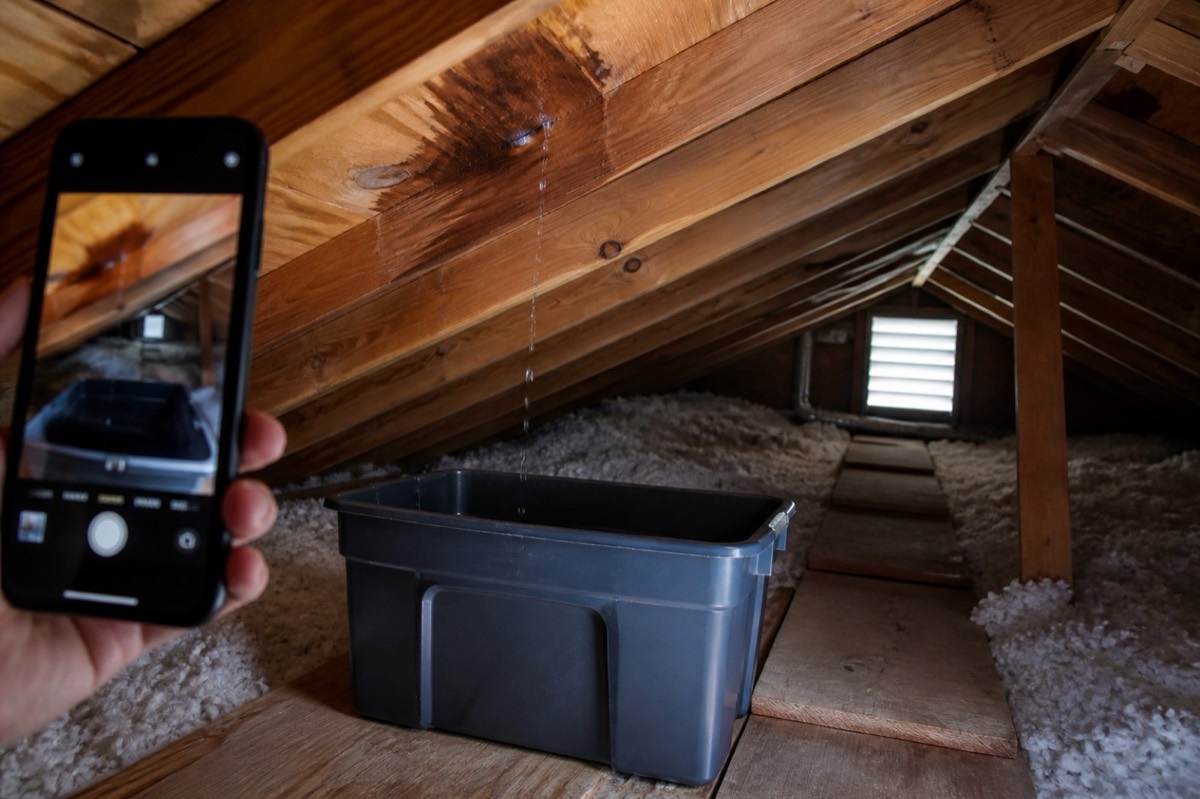
When a roof starts leaking, protect people before looking for the bad shingle. Stay away from wet ceilings and electrical parts. Keep off the roof and out of a damaged attic. Then arrange safe help and save a record of what you can see. The timing below is a planning aid, not a reason to wait during danger.
First, move people away from the hazard
Keep children and pets out of the wet area. Stay clear of a sagging, bulging, or cracked ceiling. Do not reach under it to save a rug or sofa.
Watch for wet lights, outlets, cords, and appliances. Do not touch them or step through water to reach a switch. Leave for smoke, sparks, falling ceiling parts, or signs of collapse. Call emergency services for immediate danger.
After a flood or major storm, follow reentry orders. The CDC's home reentry guide explains why structural and electrical checks come first. Do not enter an unsafe space just because the rain stopped.
Catch a small drip only if the spot is safe
A wide container may catch an ordinary drip from a safe, dry floor. Use it only if there is no sagging ceiling, falling material, electrical risk, or unsafe water.
Move light items only if you can stay out of the hazard area. Do not carry a full heavy bucket across a slippery floor. Keep a clear route out of the room.
Do not cut or poke a ceiling. Do not climb a ladder or walk the roof. Do not spread plastic over a wet light. A qualified crew should handle roof access and temporary tarps when conditions allow.
Use the next few minutes for photos, not a roof search
Take photos from a safe spot. Start with the whole room, then use zoom for the stain or drip. Show the affected floor and belongings too.
If outdoor conditions are safe, a ground-level photo may show a branch or missing roof piece. Stay inside during lightning, high wind, or flooding. Never go under a loose tree limb or near a downed line.
The NAIC claim guide recommends photos, lists, and receipts. Keep the original files. Add earlier home photos if they help show what changed.
Write a short timeline without guessing
Record:
- When you first saw water.
- Whether rain, wind, or plumbing use was happening.
- Where the water appeared.
- Whether the drip is growing or slowing.
- Recent roof, solar, vent, or gutter work.
- What you have done and whom you called.
“Water showed over the west window during rain” is a useful fact. “The whole roof failed” may be a guess. Water can travel before it shows indoors.
If the source is unclear, say so when you book help. A ceiling stain can involve more than the roof. Our ceiling stain guide helps frame that question without opening the ceiling.
Call for safe help and report the loss promptly
Tell a qualified roofer or emergency crew about the visible hazards first. Ask what temporary work is safe and what it will cost.
Contact your insurer or agent promptly about a possible covered loss and the reporting rules. Do not delay urgent safety steps while waiting for a final claim answer. Ask how to preserve evidence before permanent repairs.
Coverage depends on the policy and cause. Our roof claim guide explains the record to keep. A contractor's promise is not the insurer's decision.
Keep the emergency order narrow
Before authorizing work, ask for the business name and a written scope. It should say:
- What is temporary and what is permanent.
- The price or clear price basis.
- What photos the crew will take.
- Who handles wet indoor areas.
- What later work needs a separate approval.
Use the contractor license check and quote comparison once people are safe. Read the storm-chaser warning signs before accepting a pressured full replacement.
Keep the record until the job is closed
Save invoices, messages, photos, and claim numbers in one folder. Ask before discarding damaged items unless keeping them creates a safety risk.
Do not sign away claim rights to get ordinary repairs started. Florida's AOB guidance includes a policy-date ban that the claim guide explains.
Before the crew leaves, ask what remains unsafe and what happens next. A stopped drip is useful, but it is not proof that hidden wet materials are dry or the permanent repair is complete.
Quick answers
- Should I poke a bulging ceiling to drain it?
- No. Keep people away and get professional help. A bulge can hide a collapse, electrical, or contaminated-water hazard. Do not stand below it.
- Can I go onto the roof to put up a tarp?
- Do not climb onto the roof. Ask a qualified crew about safe temporary protection. Active storms, wet surfaces, and damaged roof parts add risks.
- Do I need a full roof contract before emergency help?
- Not necessarily. Ask for a clear, limited emergency scope and price. Separate temporary protection from a later permanent repair proposal. Do not delay urgent safety work while waiting for a final claim decision.
Keep your home plan moving
Get the free Seasonal Home Maintenance Schedule
A seasonal checklist for your roof, gutters, HVAC and more, plus practical homeowner tips. Adjust the schedule for your climate and equipment.
We don't sell your email address. See our privacy policy.
Sources
- Filing a homeowners claim — National Association of Insurance Commissioners
- Reentering your flooded home — Centers for Disease Control and Prevention
- Assignment of benefits and storm loss steps — Florida Department of Financial Services