Home › Advice › Moisture Drainage › Ceiling Water Stain: Is the Leak Active or Old?
Ceiling Water Stain: Is the Leak Active or Old?
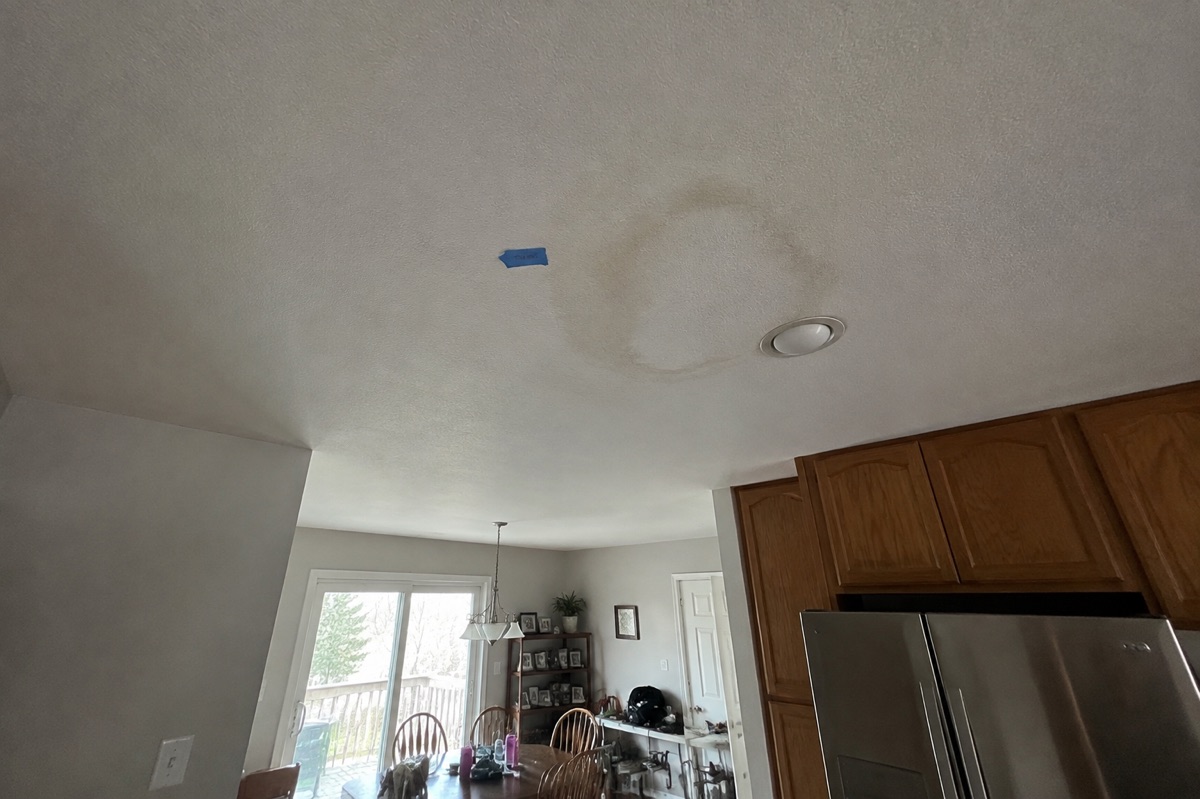
A tan ring on the ceiling may be from last year—or from water moving right now. The color cannot settle that question. Change, timing, and the area around the stain give better clues.
Stay out from under danger signs
Keep people and pets away if the ceiling sags, bulges, cracks, sheds material, or drips near a light, fan, outlet, or wire. Do not stand below it. Do not poke a hole to let water out.
For smoke, sparks, a burning smell, or a ceiling that may fall, leave the area and call emergency services. Water and electricity need qualified help.
Take the first photo before you clean or paint
Stand on the floor. Do not climb on a chair. Take one wide photo that shows the room and one closer photo of the stain.
Place a small piece of painter's tape just outside the edge if you can reach it safely from the floor or a proper work platform. Add the date to the tape. Do not write on wet drywall.
Take another photo from the same spot after rain, after normal water use above the area, and the next day. A changing edge is stronger evidence than memory.
Signs the water may still be active
Call promptly if you see:
- a ring that grows or gets darker;
- a new wet shine, bead, or drip;
- soft, sagging, cracked, or peeling material;
- a musty smell that is getting stronger;
- a mark that changes during or after rain;
- a mark that changes after a shower, toilet flush, sink use, or appliance cycle above it;
- water that returns after the surface seemed dry.
The highest visible stain may still sit below a leak that started several feet away. Water can move along framing, pipes, and the top of drywall.
Signs it may be an old stain
A stain is more likely to be old when it stays the same through rain and normal water use, feels dry and firm when checked by a qualified person, and matches a repair record.
“More likely” is not proof. A slow leak can stop and start. Condensation may appear only in certain weather. A roof leak may wait for wind from one direction.
Do not cover the mark until the source is known.
Match the timing to possible sources
It changes after rain
The roof, flashing, vent, window, siding, or exterior drainage may be involved. Use the roof-leak first steps and arrange a safe roof or exterior inspection. Do not climb onto a wet roof.
It changes after water use upstairs
A supply pipe, drain, tub, shower, toilet, sink, or appliance may be involved. Note the exact fixture and time. Do not keep running water to force the leak to appear.
It changes when heating or cooling runs
Condensation, a drain, a cold surface, or HVAC equipment may be involved. Do not open the equipment or bypass a drain safety switch.
It changes with no clear pattern
Use the water-meter leak check when all planned water use can be turned off. A roofer, plumber, HVAC technician, or moisture inspector may need to trace the path.
Drying the room is not the same as fixing it
A fan or dehumidifier may help dry safe, clean-water moisture after the source is stopped. It does not repair the roof, pipe, drain, or condensation problem.
EPA explains that mold needs moisture and can grow on hidden sides of ceiling materials. Wet drywall, insulation, or ceiling tile may need removal by a qualified person. If sewage or dirty water was involved, use professional cleanup.
Build the repair record
Save:
- dated photos from the same angle;
- rain, temperature, and water-use timing;
- the outline size;
- smell, drip, sag, or texture changes;
- who inspected it and what they tested;
- invoices and before-and-after photos.
Ask the pro to name the source, not just the stain. Then ask how the wet material was checked and dried before patching or painting. If a musty odor remains, follow the musty-smell moisture check.
Quick answers
- Does a brown ceiling stain mean the leak is active?
- Color alone cannot tell you. Watch for change in size, a new dark edge, dampness, drips, sagging, or a pattern tied to rain or water use. A pro may need to test the area and trace the source.
- Should I puncture a bulging ceiling to drain it?
- No. Keep people out from below it. A wet ceiling can fall, and water may be near wiring. Call qualified emergency, plumbing, roofing, and electrical help as the signs require.
- Can I paint over a dry water stain?
- Only after the source is found, the repair is complete, and the ceiling is fully dry and sound. Paint can hide a clue without fixing the leak.
Keep your home plan moving
Get the free Seasonal Home Maintenance Schedule
Month-by-month checklist for your state — roof, gutters, HVAC and more. Plus license-lapse alerts for contractors you're considering.
We don't sell your email address. See our privacy policy.
Sources
- Mold and Your Home — U.S. Environmental Protection Agency
- How to Protect Your Home From Water Damage — Insurance Information Institute
- Mold Course Chapter 3: Finding Mold and Moisture — U.S. Environmental Protection Agency