Home › Advice › Home Emergencies › Water Heater Leaking? Stay Safe and Call for Help
Water Heater Leaking? Stay Safe and Call for Help
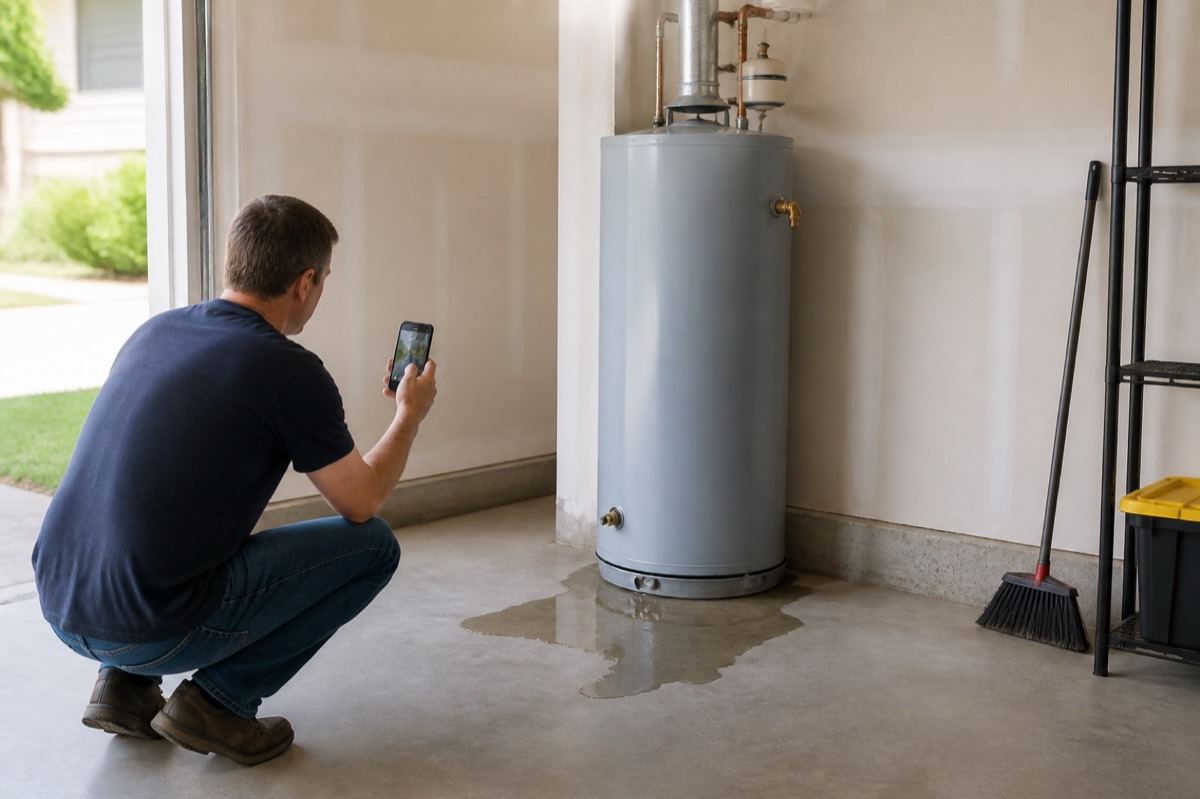
Water beside a water heater does not prove the tank has failed. Keep away from gas, hot water, wet electrical parts, and pressure hazards. Get the model's safe shutdown steps before turning valves at random. Your useful first task is to call qualified help with a clear account of what you see.
Leave for gas, a CO alarm, or immediate danger
For gas odor, a hissing gas sound, smoke, fire, or a carbon monoxide alarm, leave the building. Call emergency services or the gas utility from outside. Do not search for the source or operate switches on the way out.
CO has no color or smell. CPSC's guidance says never to ignore an alarm. Fuel-burning water heaters are among the possible sources.
Keep clear of water near outlets, wiring, or an electrical panel. Do not walk through a puddle to shut off power. Tell the responder or service company when the controls cannot be reached safely.
Do not cut water and leave the heat on
The safe shutdown depends on whether the heater uses gas, electricity, or another source. Identify the model from a safely visible label or your records. Call the plumber or maker if the steps are unclear.
A. O. Smith's electric-heater leak guide starts with power off. Its 120V hybrid manual also places power shutdown before closing the cold water supply. These are examples, not one set of controls for all heaters.
Do not leave the heater heating after you cut off its water. Use your exact manual's power or fuel shutdown, then water steps, only if you can do them safely. Otherwise, keep away and get urgent help. Do not attempt electrical testing, remove fuses, or work inside the heater.
Keep away from hot water and the relief outlet
Hot water can burn. Do not test puddle heat with your hand. Keep children and pets away from the heater and its drain pipe.
Never cap, plug, clamp, or block the temperature-and-pressure relief pipe. It is a safety outlet, not a leak to seal shut. Do not operate the relief valve during an active leak to see what happens.
Do not open the burner or wiring covers. Do not drain the tank as a home test. A small puddle does not tell you whether the source is hot, pressurized, or safe to touch.
Record what is visible without probing
From a safe place, note the highest wet point you can see. It may be above the heater rather than at the tank base.
Useful photos show:
- The whole heater and surrounding area.
- Visible pipes and connections.
- The drain pan and nearby floor.
- The relief pipe, without touching it.
- The model label if you can read it safely.
- Nearby plumbing or equipment that could be leaking.
Do not move close for a photo if the floor or controls are unsafe. Do not remove insulation or wipe around live parts to trace a drip.
Make the service call easy to act on
Tell the plumber whether water is spreading now. Describe hazards before discussing repair cost. Give the fuel type, tank or tankless type, model, and any error code you can read.
Then state which controls were used and when. For example, “The labeled power switch is off; no water valve has been moved.” Say “unknown” if you are not sure. A wrong shutdown report can create risk for the next person.
Use the main water shutoff plan only with the heater's shutdown needs in mind. Do not force a stuck, hot, or corroded valve.
Ask for a safe restart and a written scope
Get the confirmed source, repair price, and any replacement option in writing. Ask what work needs a permit and who handles it. Use our contract checklist for the job terms.
Do not restore heat, fuel, power, or water until the qualified person says how to do so safely. A tank may need to be full before power returns. The exact manual governs.
Save the repair and restart notes in your home care record. If water use remains unexplained after the repair, plan a meter check with the plumber. Do not run that test during an active heater leak.
Quick answers
- Should I shut the water off to a leaking heater first?
- Do not leave the heater heating with its water supply cut off. Follow its exact shutdown instructions, which address power or fuel before the water supply. If controls are unsafe or unclear, keep away and get urgent qualified help.
- Does water beside the heater mean the tank failed?
- No. Water can come from a pipe, fitting, valve, drain, nearby unit, or tank. Observe from a safe spot and let a qualified person confirm the cause.
- Can I plug the relief pipe to stop a drip?
- No. Never cap, plug, clamp, or block the temperature-and-pressure relief discharge. Keep clear of hot discharge and call a qualified plumber.
Keep your home plan moving
Get the free Seasonal Home Maintenance Schedule
A seasonal checklist for your roof, gutters, HVAC and more, plus practical homeowner tips. Adjust the schedule for your climate and equipment.
We don't sell your email address. See our privacy policy.
Sources
- What to do if a water heater leaks — A. O. Smith
- 120V hybrid water heater use and care guide — A. O. Smith
- Carbon monoxide questions and answers — U.S. Consumer Product Safety Commission