Home › Advice › Appliances › Refrigerator Warming? Use the Food Safety Time Limits
Refrigerator Warming? Use the Food Safety Time Limits
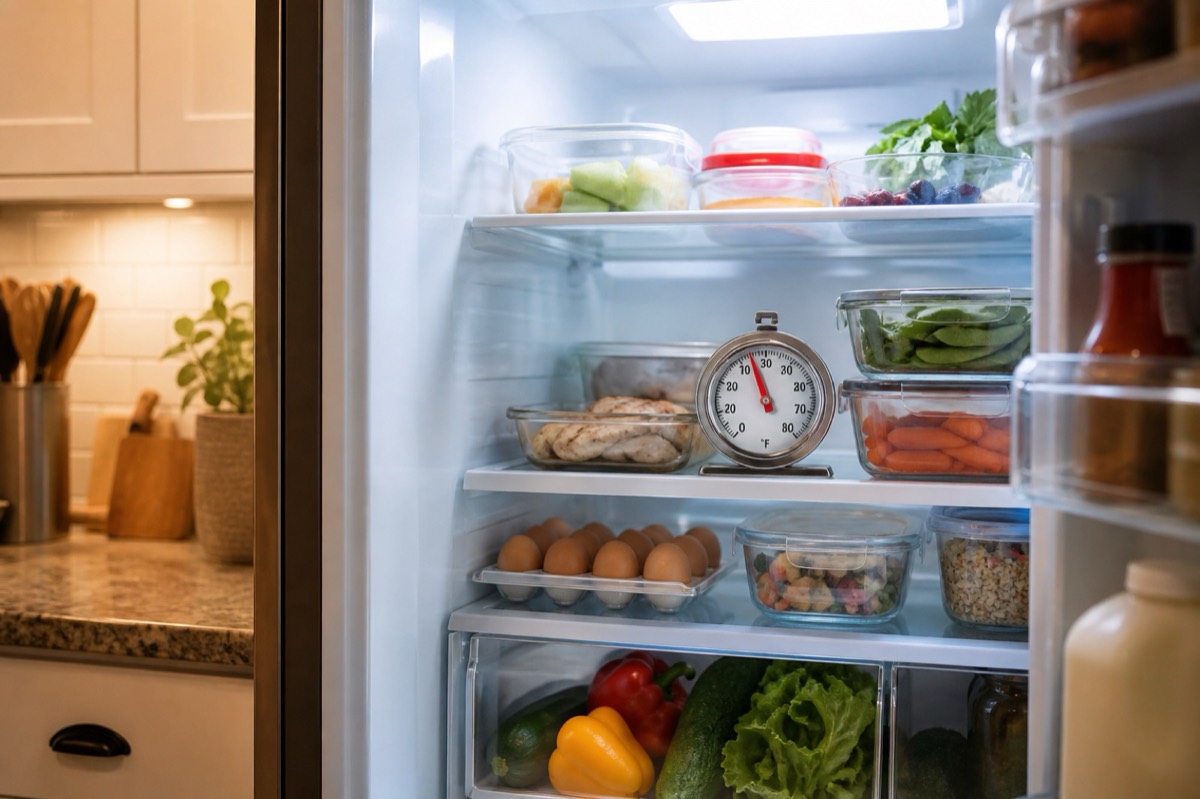
If the fridge is warming, protect food before trying to fix the appliance. Keep it at 40°F or colder and use an appliance thermometer. During an outage, a closed fridge can keep food safe for up to four hours. That is not four more hours from when you notice the problem. Never taste food to test its safety.
Write down the time you know, not the time you guess
Keep the doors closed as much as possible. Note when power went out or when cooling last worked. Record a thermometer reading if you can get it without a long door opening.
If the failure began while you were away, mark the start time unknown. Do not use the moment you got home as the start of a safe window.
A cold-feeling carton does not settle the question. Food can be unsafe without a bad smell or visible change. Keep children from taking food while you sort it.
Use the two different time rules correctly
FoodSafety.gov's outage guide gives both rules:
- Closed fridge during an outage: up to four hours of protection. After four hours without power, discard refrigerated perishables such as meat, fish, eggs, and leftovers.
- Known warm exposure: its food chart says to discard listed perishables after more than two hours at 40°F or above.
The second rule helps when the unit still has power but is not cooling. It also matters if a door was left open. Do not add the two time limits together.
Food moved in time to another cold fridge or a properly iced cooler has a different record. Keep it at 40°F or colder and track the temperature. Moving already unsafe food to cold storage does not make it safe again.
Check the food type, not just the shelf
Use the chart for each item. Milk, soft cheese, cooked rice, and cut fruit do not have the same rules as butter, hard cheese, or whole uncut fruit.
If you cannot tell how long a perishable item was warm, discard it. A new low reading after power returns cannot prove what happened earlier.
For frozen food, use the freezer part of the chart. Some food can be refrozen if it still has ice crystals or is 40°F or below. The chart has exceptions, including ice cream. Do not use the refrigerator rule as a shortcut for everything in the freezer.
Make a cold-storage plan before a long repair wait
Call ahead to find space in a working fridge or freezer. If using a cooler, arrange enough ice and a thermometer. Do not leave food on the counter while making calls.
The FDA outage guide explains backup cold storage and the 40°F fridge target. Use a controlled cold space, not an outdoor spot that only feels cold.
Keep a short list of discarded items if you need it for a claim. Do not keep unsafe food just to show a repair worker or insurer.
Check only the simple, safe appliance issues
After food decisions are handled, look for a blocked door, a changed setting, or food covering an inside air vent. Whirlpool's cooling guide describes these checks. Use your model's own manual for controls and clearances.
Do not remove covers or reach behind a running unit. Do not chip ice or use a heat gun. Do not pull a heavy fridge to hunt for a hidden part.
Stop for smoke, a burned smell, a hot outlet, sparks, or water near electricity. Do not touch an unsafe plug. For a trip, use our breaker guide, not repeated resets.
Give the technician facts that help
Send the model, age if known, temperatures, and failure timeline. Note whether lights and fans work, and describe clicks, frost, leaks, or error codes.
Ask for the cause, total repair cost, and warranty on the work. Our appliance repair-or-replace guide helps compare that quote with a replacement. Check warranty versus insurance coverage separately; do not assume either pays.
After repair, verify a safe temperature before restocking. Save the food and service notes so the next decision starts with facts.
Quick answers
- What temperature should the refrigerator hold?
- Keep the refrigerator at 40°F or colder and use an appliance thermometer. A fresh cold reading does not prove that food stayed safe during an earlier warm period.
- How long is food safe in a power outage?
- A refrigerator that starts cold can keep food safe for up to four hours if the door stays closed. After four hours without power, discard refrigerated perishables such as meat, eggs, and leftovers unless you have kept them safely cold by another method.
- Can I taste food to decide if it is safe?
- No. Do not use taste, smell, or looks to decide. Use the time, temperature, and food-specific federal chart. If you cannot establish that a perishable food stayed safe, discard it.
Keep your home plan moving
Get the free Seasonal Home Maintenance Schedule
A seasonal checklist for your roof, gutters, HVAC and more, plus practical homeowner tips. Adjust the schedule for your climate and equipment.
We don't sell your email address. See our privacy policy.
Sources
- Food safety during power outage — FoodSafety.gov
- Refrigerator not cooling — Whirlpool
- Food and water safety during power outages — U.S. Food and Drug Administration