Home › Advice › Electrical & Fire Safety › Breaker Keeps Tripping? Stop and Get the Cause Checked
Breaker Keeps Tripping? Stop and Get the Cause Checked
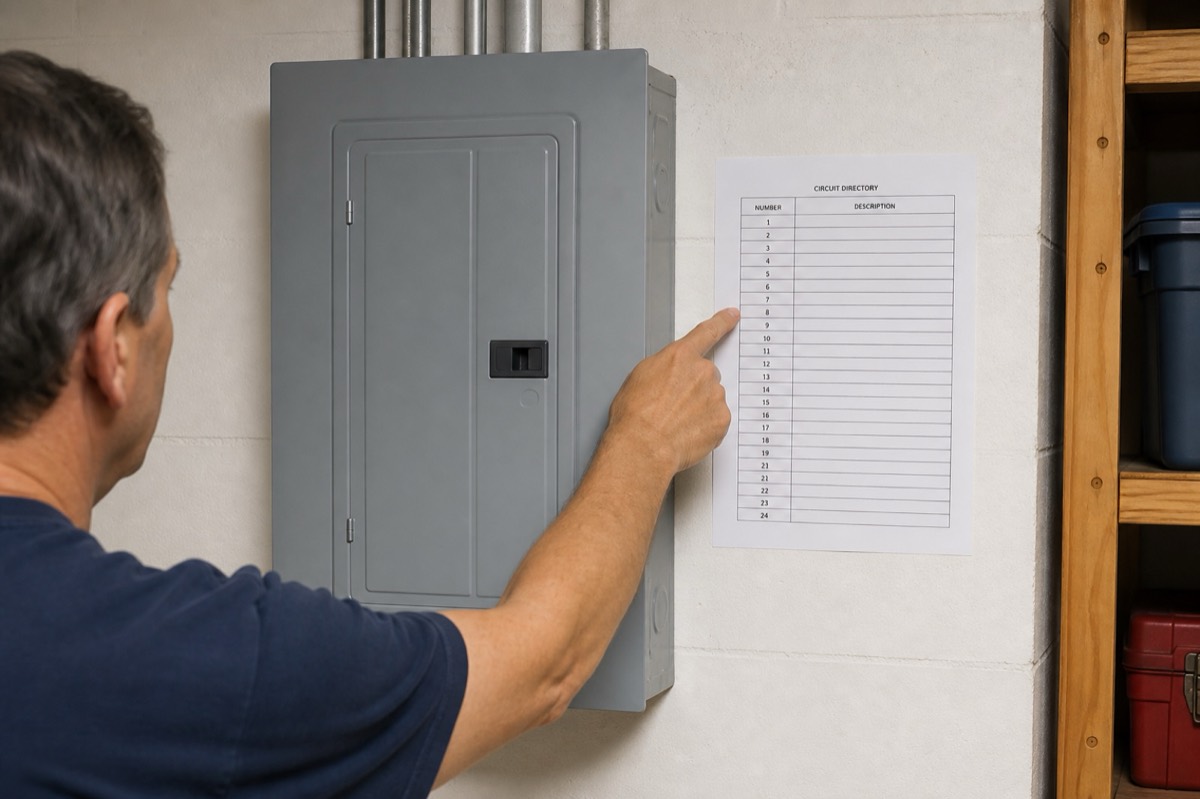
If a breaker keeps tripping, stop resetting it. Leave the affected circuit off and get the cause checked. A breaker is a safety device, not a switch to force an appliance to run. You can help by recording what happened without opening the panel or repeating the fault.
Leave for fire or immediate danger
Stay away from a panel that is wet, hot, damaged, sparking, or making unusual noise. Do not walk through water to reach it. Keep clear of a burned smell, smoke, loose covers, or exposed wiring.
For smoke, fire, or immediate danger, get out and call emergency services from outside. Do not use water on an electrical fire. A shock or tingling from a device is also a reason to stop using it and get help.
The CPSC home wiring guide lists repeated trips, heat, odor, buzzing, and shocks as warning signs. Its repair advice is for qualified electrical help, not trial and error at the panel.
Record what lost power
From safe rooms, make a short list of lights, outlets, and appliances that stopped. Note which devices were running just before the trip.
You do not need to prove the cause. Useful notes look like this:
- “The hall lights went out when the vacuum started.”
- “The dryer stopped and the breaker was tripped.”
- “The trip happened after water leaked near the washer.”
- “No one knows when power went out.”
These are examples of how to describe facts, not diagnoses. Do not turn things back on to see whether the same event happens again.
Reset once, then stop
One reset is fine if nothing looks, sounds, or smells wrong. First unplug what was on that circuit. Then switch the breaker fully off and back on, as PG&E's reset steps show. If it trips again, leave it off and call an electrician.
Standing to one side or using one hand does not make a faulty panel safe. Do not treat those actions as protective gear. Do not remove a cover, reach inside, or use a meter to test live parts.
Never tape or hold a breaker on. Never replace it with a larger breaker to stop trips. Do not bypass a ground-fault or arc-fault device. Those devices are there to protect people and wiring.
Reduce use only where it is safe
You may turn off or unplug ordinary portable devices if the outlet, plug, hands, and floor are dry and undamaged. Do not pull a hot, loose, burned, or wet plug. Do not move a heavy appliance or disconnect fixed wiring.
USFA advises plugging major appliances directly into wall outlets, not extension cords. Do not move a failing appliance to another circuit just to keep using it.
If the problem involves a dryer, use our dryer stop signs. For an AC problem, use the safe cooling checklist. Neither guide replaces an electrical fault check.
Give the electrician a clear timeline
Save one note with:
- The time of each known trip.
- The circuit label, if visible without opening a cover.
- Which devices were on.
- Any recent leak, storm, move, or repair.
- Any flicker, sound, heat, or smell before the trip.
- What you unplugged or turned off.
- Whether anyone felt a shock.
A photo of a closed, safely reachable panel label may help. Do not go near a hazard for a better image. Say “unknown” where you do not know a fact.
Ask which loads must stay off until the visit. If the circuit powers needed medical equipment, contact the care team or equipment provider for a safe backup plan.
Close the fault, not just the service call
Ask the electrician to explain the cause, repair, and safe return-to-use steps. Get the findings and price in writing. A breaker that holds after a reset does not by itself prove the issue is gone.
Update any wrong circuit labels through the electrician. Keep the work record and any permit details in your home file.
Check that your smoke and CO alarm plan remains in place. The goal is a known safe circuit, not simply getting the lights back on.
Quick answers
- Should I keep resetting a breaker that trips?
- No. One reset is fine if nothing looks or smells wrong. If it trips again, leave the circuit off and get the cause checked. Do not hold or tape a breaker on, fit a larger one, or bypass a safety device.
- Can I open the panel to look for a loose wire?
- No. Do not remove the panel cover. Parts may still be live even when a main switch is off. Have a qualified electrician inspect the panel.
- What should I record for the electrician?
- Note what lost power, what was running, when the trip happened, and any moisture, heat, smell, noise, or recent work. Do not recreate the fault to gather more information.
Keep your home plan moving
Get the free Seasonal Home Maintenance Schedule
A seasonal checklist for your roof, gutters, HVAC and more, plus practical homeowner tips. Adjust the schedule for your climate and equipment.
We don't sell your email address. See our privacy policy.
Sources
- Home wiring hazards — U.S. Consumer Product Safety Commission
- Home electrical safety checklist — U.S. Consumer Product Safety Commission
- Appliance and electrical fire safety — U.S. Fire Administration