Home › Advice › Electrical Fire Safety › Warm, Buzzing, or Scorched Outlet? Stop Using It
Warm, Buzzing, or Scorched Outlet? Stop Using It
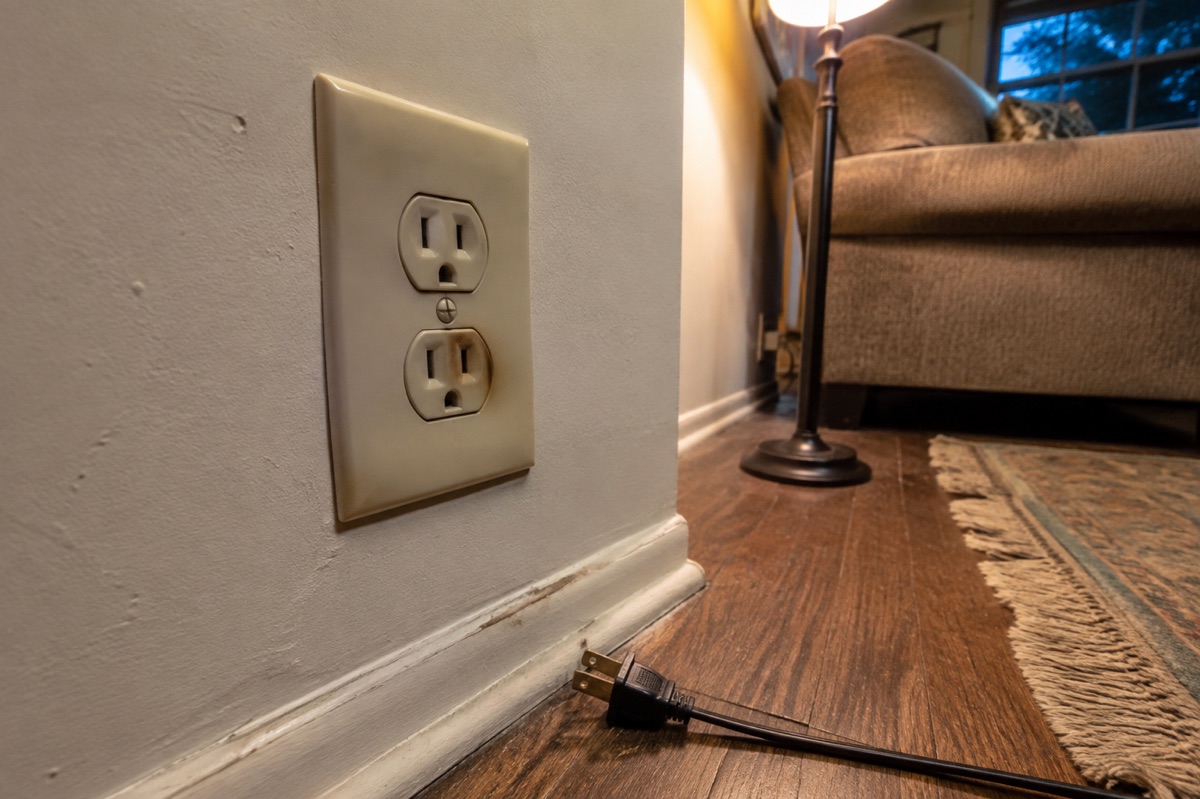
A wall outlet should not make you stop and wonder whether it is safe. Heat, a buzz, a burned mark, a loose plug, a shock, or a burning smell is enough reason to stop using it.
Smoke, flame, or sparks come first
Move people away. If there is smoke, flame, active sparking, or a strong burning smell, leave and call emergency services. Do not throw water on an electrical fire. Do not touch the outlet, plug, cord, wall, or nearby metal.
If there is no active fire, stop using the outlet. Do not plug something in “one more time” to test it.
What each warning sign tells you
The sign does not name the failed part. It tells you the circuit needs attention.
The cover feels warm or hot
The Electrical Safety Foundation International lists warm outlets as a possible sign of a serious wiring problem. Heat can come from too much load, a loose connection, a bad device, or another fault.
Do not remove the cover to look. The wiring behind it may still be live.
You hear buzzing, crackling, or sizzling
These sounds are not normal outlet noise. ESFI advises having a qualified electrician inspect the system. Do not hold your ear close to the outlet or wiggle the plug.
The plate is brown, yellow, melted, or cracked
A color change may show heat buildup. A broken plate can also leave wiring less protected. Do not paint over the mark or replace only the cover and assume the cause is gone.
A plug falls out or sits loose
The U.S. Fire Administration says plugs should fit snugly and fully. A loose fit can create heat at the contact point. Stop using the outlet until it is checked and replaced if needed.
You feel a tingle or shock
Even a mild shock is a stop sign. Do not repeat the touch to confirm it. Keep others away and call an electrician.
Should you turn off the breaker?
If there is no smoke or immediate danger, and you can stand on a dry floor, you may turn off the clearly labeled circuit breaker. Do not guess at an unlabeled breaker. Do not open the panel cover.
If the breaker is hot, wet, damaged, buzzing, or sparking, stay away. If a breaker trips again, do not reset it. Use the breaker keeps tripping guide for the safe handoff.
Turning off the breaker does not make a damaged outlet a do-it-yourself repair. A qualified electrician still needs to find the cause.
Check the device without moving the danger
Was a heater, air conditioner, toaster, hair tool, or other high-use device connected? Was an extension cord or multi-plug adapter involved? USFA advises against overloading outlets and says major appliances should not use extension cords.
Do not move a suspect appliance to another outlet just to see what happens. A damaged cord or device can harm a second outlet.
After the area is safe and cool, tell the electrician what was plugged in and whether the warning appeared only when that device ran.
Photograph from a safe distance
Take a wide photo of the wall and a closer photo only if you can do so without touching anything. Record:
- the room and outlet location;
- what was plugged in;
- whether the plug felt loose;
- heat, sound, smell, color, spark, or shock;
- whether lights dimmed or a breaker tripped;
- when the sign began and whether it stopped after power was cut.
Do not use a phone flash inches from active sparking or smoke. Safety comes before the record.
What to ask the electrician
Ask for the source of the heat or damage, the repair scope, and whether nearby outlets on the same circuit need inspection. Ask whether the circuit, device load, receptacle, box, connections, and protective devices were checked.
A new cover plate can hide the mark. It cannot prove the fault is gone. After the repair, test and record your smoke and carbon-monoxide alarms as part of the same home-safety check.
If you hire someone new for the work, use the contractor license check before the visit.
Quick answers
- Is a warm wall outlet dangerous?
- Warmth, discoloration, buzzing, a burning smell, a loose fit, sparks, or a shock can point to an overload, a bad connection, damaged wiring, or a failing device. Stop using the outlet and have a qualified electrician inspect it.
- Can I keep using another socket on the same outlet?
- Do not use either socket until the outlet and circuit have been checked. The problem may sit behind the cover or elsewhere on the circuit, where you cannot see it.
- Should I remove a plug from a hot outlet?
- Do not touch a hot, melted, sparking, or smoking plug or outlet. Move away and call emergency services for fire or immediate danger. A qualified electrician or emergency responder can make the area safe.
Keep your home plan moving
Get the free Seasonal Home Maintenance Schedule
Month-by-month checklist for your state — roof, gutters, HVAC and more. Plus license-lapse alerts for contractors you're considering.
We don't sell your email address. See our privacy policy.
Sources
- Appliance and Electrical Fire Safety — U.S. Fire Administration
- Home Electrical Safety — Electrical Safety Foundation International
- Electrical Safety Dos — Electrical Safety Foundation International