Home › Advice › Electrical & Fire Safety › Aluminum Wiring: How to Spot It Safely and Which Repairs CPSC Recognizes
Aluminum Wiring: How to Spot It Safely and Which Repairs CPSC Recognizes
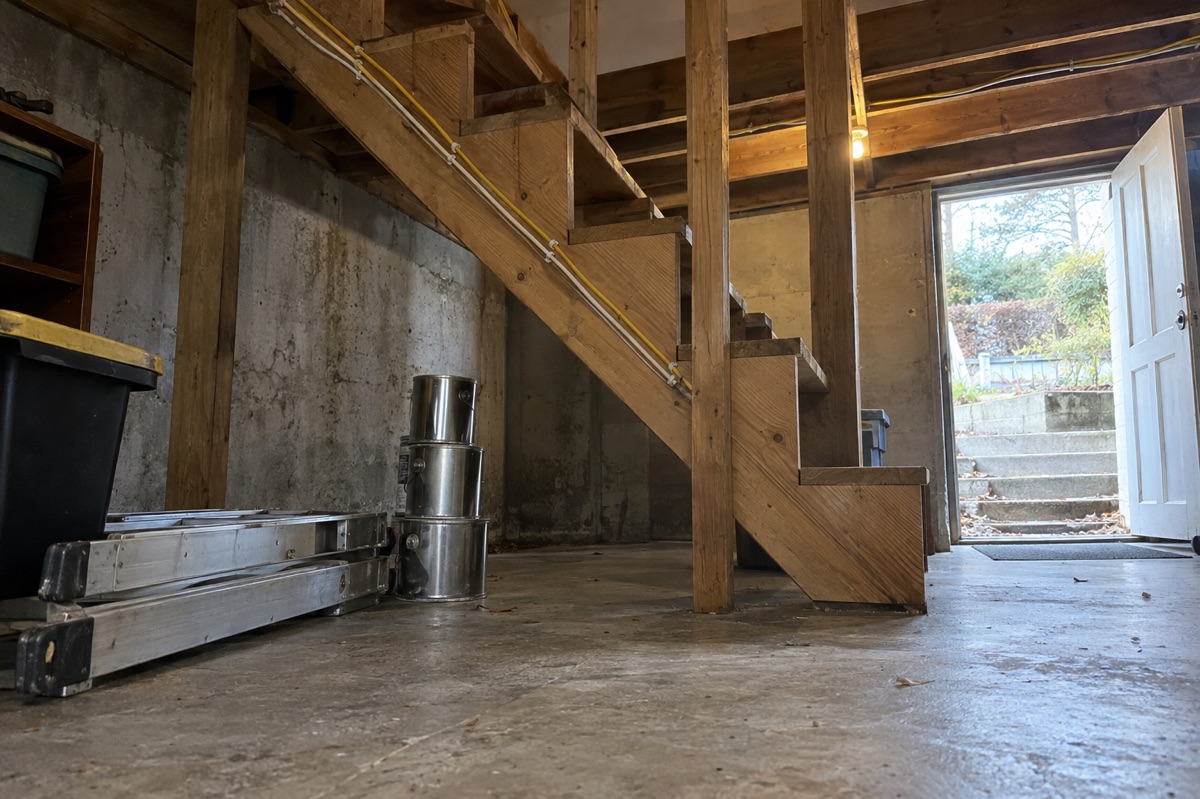
Read the cable without touching it. Where cables show in an unfinished basement or garage, or from the attic hatch, read the printing on the jacket. Aluminum cable says AL or ALUMINUM every few feet. CPSC says the fire hazard shows up where aluminum wire is connected: outlets, switches, splices, junction boxes, and appliances. It recognizes three permanent repairs and says to hire a qualified electrician for them. If an outlet or switch is hot, or lights flicker, stop using it and call a licensed electrician.
Where and how to look
CPSC says almost all aluminum wiring went in as plastic-sheathed cable, the same kind used with copper. So you can't tell by the cable's shape or color. You read the jacket.
Look from the floor in an unfinished basement or garage. You can also look through the attic hatch, but don't climb in, reach in, or touch insulation. Hold a flashlight at a low angle so the embossed letters show. Read as much of the marking as you can. CPSC says it's printed on one side of the cable, so it may face the wall.
If the jacket also says CU-clad or Copper-clad, that's copper-coated aluminum. CPSC says its repair advice doesn't cover that kind. Can't find a marking? Have a qualified electrician make the call. The free House Decoder flags this wiring for the build years CPSC names.
Which homes have it
CPSC says cables put in from 1965 to the mid-1970s may be aluminum. That covers new homes, additions, and new circuits added in those years. Homes built before 1965 are unlikely to have it. A 2006 UL history says the wire got popular from the mid-1960s through the 1970s because copper got expensive. It says aluminum is rarely used for branch circuits today.
Branch circuits are the everyday 15- and 20-amp circuits for outlets and lights. CPSC's repair advice is about those. It doesn't apply to the bigger aluminum cables that feed a dryer, a range, or the whole panel.
Warning signs CPSC names
CPSC lists these signs of trouble:
- A cover plate on an outlet or switch that's hot to the touch.
- Flickering lights.
- A circuit that doesn't work.
- A burning-plastic smell at an outlet or switch.
Stop using that outlet or switch. Call a licensed electrician. Don't remove the cover to look. CPSC's words are "DO NOT TRY TO DO IT YOURSELF." You could be electrocuted or make the problem worse. If you see smoke or fire, get out and call 911. The warm outlet guide covers the stop rules in more detail. If a breaker trips more than once, use the breaker guide. For the rest of the site's electrical guides, start at Electrical and Fire Safety.
CPSC also warns that failing aluminum connections seldom give easy-to-spot warnings. They've been reported to overheat with no signs first. So no warning sign does not mean no problem.
Where the heat builds
CPSC says the hazard happens at connections. That means outlets, switches, junction boxes, and hard-wired appliances like dishwashers and furnaces. Over time the metal at a connection breaks down. Resistance rises. Heat builds while current flows.
A survey done for CPSC compared homes built before 1972. It found aluminum-wired homes were 55 times more likely to have an outlet connection reach fire hazard conditions. That's the survey's term. It meant very hot cover screws, sparks, or charring. The comparison was with copper-wired homes. The survey looked only at outlets, and only at those older homes. It's an old number, but it's CPSC's number.
The repairs CPSC recognizes
CPSC says a repair must be safe, effective, and permanent. As of 2011, it recognizes three methods.
| Method | What CPSC says | Citizens in Florida |
|---|---|---|
| Full copper rewire | Removes the cause. Best, but often costly. | Accepted. |
| COPALUM crimp | Copper pigtail crimped with a special tool. Recommended. Maker-trained electricians only. | Accepted. |
| AlumiConn connector | Setscrew connector. Next best if COPALUM isn't available. Less long-term history as of 2011. | Accepted. |
| Twist-on pigtail | Not a recommended repair. Only AL/CU-rated connectors, and only as an emergency, temporary fix. | Not on its list. |
| CO/ALR outlets and switches | At best an incomplete repair. Emergency, temporary use only. | Not on its list. |
| Other crimp connectors | Not evaluated. CPSC strongly recommends against them. | Not on its list. |
Every connection counts. CPSC lists outlets, dimmers, switches, fixtures, appliances, junction boxes, and the panel. A repair that skips the ceiling lights isn't finished. CPSC also says local rules govern the work and its inspection.
What Florida insurers ask to see
Citizens Property Insurance Corporation accepts multi-strand aluminum. It does not accept single-strand aluminum branch wiring, with two exceptions. One: the home was fully rewired with copper. Two: every aluminum-to-copper connection was fixed with COPALUM or AlumiConn. Its 4-point form says a licensed electrician must certify the repair papers. Citizens also says it can't accept Leviton products for this repair.
Other Florida insurers have published similar rules. Universal's 2018 guide excludes aluminum branch wire but accepts AlumiConn and COPALUM. Anchor's 2019 guide wants papers showing the connectors went into every junction box, including switches, outlets, and ceiling lights. Those guides date from 2018 and 2019. Ask your agent what yours accepts today.
InterNACHI's rules say a home inspector reports solid aluminum wiring only when it's readily visible, and doesn't have to remove the panel cover. So a clean inspection report doesn't settle it. Citizens' 4-point form goes further: it requires a photo of the panel with the cover off. Ask the inspector to state what they found.
Questions before you sign
Ask the electrician, and get the answers in writing:
- Which method will you use, and why that one for this house?
- If COPALUM, are you trained by the maker? Ask to see proof.
- Will you repair every connection, including lights, appliances, junction boxes, and the panel?
- How many connections did you find, and how many did you repair?
- Does the job need a permit and an inspection? Who pulls it?
- Will you give a signed statement naming the method and the count?
- Will my insurer accept this method? Ask the agent the same question first.
Before you sign, run the license check and put the method and the count in the written contract.
Paperwork that follows the house
Keep the signed statement, the permit, and the invoice together. Add the photos that show AL on the cable. Give copies to your agent, and add any later electrical work to the same file.
Quick answers
- How do I know if my house has aluminum wiring?
- Read the printing on cable jackets where they are visible, such as an unfinished basement, a garage, or the attic seen from the hatch. Aluminum cable is marked AL or ALUMINUM every few feet. Don't touch the cable. If you can't tell, have a qualified electrician check.
- Is pigtailing with twist-on connectors an acceptable fix for aluminum wiring?
- Not as a permanent repair. CPSC says twist-on pigtails made with AL/CU-rated connectors, and CO/ALR outlets and switches, may serve only as an emergency, temporary repair, followed by a permanent repair as soon as possible. It recognizes three permanent methods, which are a full copper rewire, COPALUM crimps, or AlumiConn connectors.
- Does Citizens insure a Florida home with aluminum wiring?
- Citizens accepts multi-strand aluminum. It does not accept single-strand aluminum branch wiring unless the home was fully rewired with copper or every aluminum-to-copper connection was repaired with COPALUM or AlumiConn. Its 4-point form requires the repair paperwork to be certified by a licensed electrician.
Keep your home plan moving
Get the free Seasonal Home Maintenance Schedule
A seasonal checklist for your roof, gutters, HVAC and more, plus practical homeowner tips. Adjust the schedule for your climate and equipment.
We don't sell your email address. See our privacy policy.
Sources
- Repairing Aluminum Wiring (Publication 516, June 2011) — U.S. Consumer Product Safety Commission
- Some History of Residential Wiring Practices in the U.S. (2006) — Underwriters Laboratories (copy hosted by the City of Idaho Falls)
- Is aluminum branch wiring acceptable? (FAQ 1550, updated April 16, 2026) — Citizens Property Insurance Corporation
- 4-Point Inspection Form (sample form Insp4pt 03 25) — Citizens Property Insurance Corporation
- Florida Underwriting Binding Guidelines (10-24-18 edition) — Universal Property and Casualty Insurance Company
- Underwriting Reference Guide for Florida Premier Homeowners (V20191216) — Anchor Insurance
- Home Inspection Standards of Practice (revised October 2022) — International Association of Certified Home Inspectors