Home › Advice › Hiring Contractors › What to Check Before You Sign a Home Repair Contract
What to Check Before You Sign a Home Repair Contract
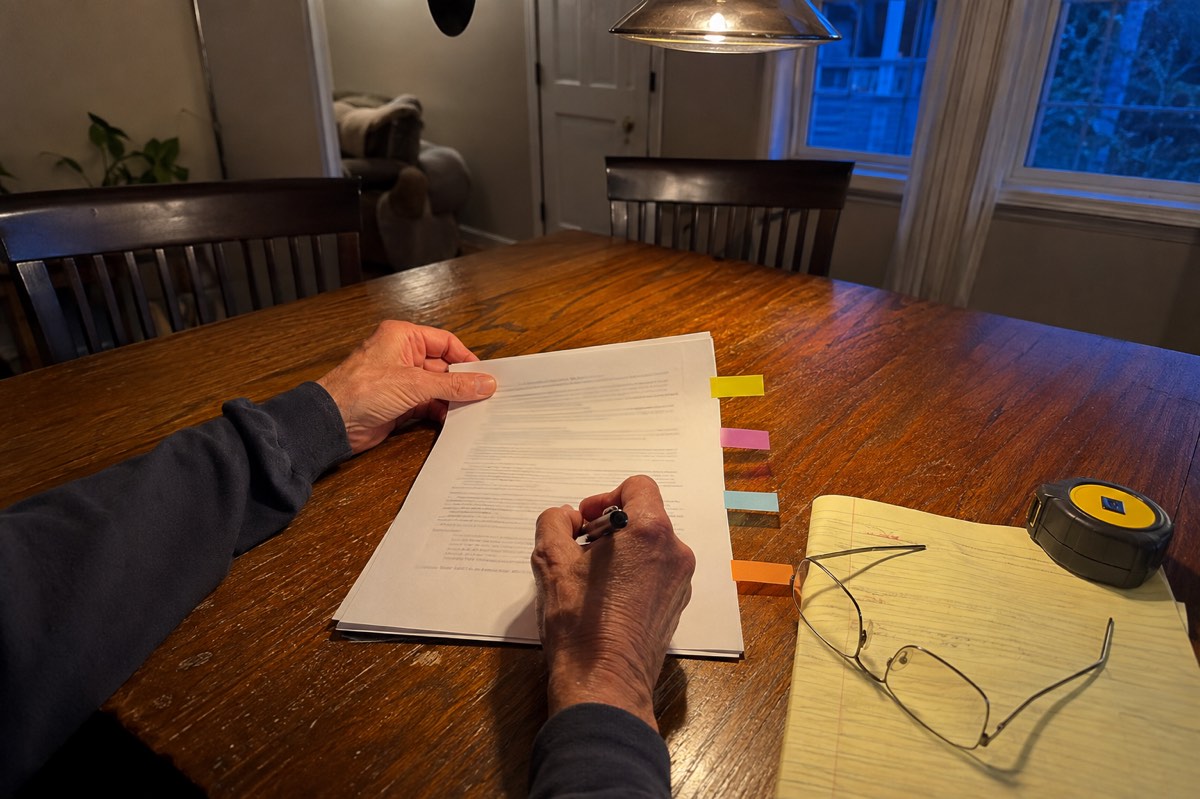
Before signing a home repair contract, check that it names the work, the full price, and when each payment is due. Put sales promises in writing. Leave no blank spaces. A clear contract cannot prevent every dispute, but it gives both sides a record of what they agreed to do.
Match the contract to the business you checked
The business name, address, and license details should match your research. Use our license check steps if you have only checked a review site.
Ask who will manage the job and how to reach that person. If a different company will do part of the work, ask what role it will have.
Keep a signed copy before work starts. Store it with the bid, messages, product sheets, and proof of insurance. Do not rely on a web link that could later change or vanish.
Turn the scope into a list you can check
A line such as “replace roof” leaves room for two very different jobs. Ask the contractor to list what is included and what is not.
For a roof, that might include:
- The areas being repaired or replaced.
- The product brand, model, color, and quantity.
- Tear-off, disposal, and protection of the yard.
- Flashing, vents, and work around roof openings.
- Who gets permits and arranges inspections.
- How hidden damaged wood will be priced.
For another trade, adapt the list to the actual job. Our roof quote guide shows how to compare like scopes.
Give vague words a test. If the contract says “premium,” ask for the exact product. If it says “as needed,” ask who decides and how you approve the added cost.
Make price and payment stages clear
List the full price, deposit, and later payment stages. Each stage should be tied to work you can verify, not just a date on the calendar. Ask which permit checks must happen before payment.
Deposit laws vary. For California home improvement contracts, CSLB states that the down payment cannot exceed $1,000 or 10 percent of the price, whichever is less. Do not copy that limit into another state's rules without checking.
Do not pay the full job price up front. If a lender is involved, ask when it releases funds and whether you must confirm work first. Read our funding comparison guide before treating loan approval as proof that the repair deal is sound.
Plan changes and delays before they happen
Put the expected start and finish dates in the contract. Ask what can delay the job and how you will be told. Weather delays and a missing permit are different problems; the agreement should not hide both behind a vague promise.
Require a written change order before nonurgent extra work. It should list the new work, added or reduced price, and effect on timing. Both sides should sign it.
If an urgent hazard needs quick action, keep that scope limited and document the approval as soon as possible. Do not let a small emergency become an open-ended full replacement order.
Use the right lien release at the right time
A lien release deals with a claim against the property for unpaid work or supplies. Rules and forms differ by state. Paying the main contractor alone may not prove that every supplier was paid.
California's release guide separates two forms. A conditional release depends on the stated payment being made. An unconditional release states that payment has already been received.
Plan that exchange with each payment. Do not demand that someone falsely sign that money arrived before it did. Ask which contractors, subs, and suppliers must provide releases. One release from the main contractor may not cover the others.
For a lien notice or dispute, get state-specific legal help promptly. This checklist is not a substitute for advice on your contract.
Read warranty and cancellation terms
Ask what the labor warranty covers, how long it lasts, and how to request service. Keep the maker's product warranty too. The two may cover different things.
Verbal promises are not always unenforceable. But written terms give you stronger proof of what was said. A warranty may also come from law, not only the contract.
The FTC Cooling-Off Rule gives cancellation rights for certain sales away from a seller's usual business. It has exceptions; not every home repair deal gets three days. Check the notice, deadline, method, and any state rights before you sign.
Do one last read without the sales pitch
Read the entire agreement when you are not being rushed. Circle blanks, vague allowances, and terms that differ from the bid. Ask for a clean corrected copy.
At closeout, check the agreed work, punch list, permits, receipts, and release paperwork before the final payment is due. Keep the file after the crew leaves. It is your record for service calls, a sale, or a dispute.
Quick answers
- How much can a contractor ask for up front?
- State rules differ. California generally limits a home improvement down payment to $1,000 or 10 percent of the contract price, whichever is less. Check the rule where you live and tie later payments to clear work stages.
- Are verbal promises always unenforceable?
- No. Legal rights depend on the facts and state law. Still, written terms give you clearer proof. Put important promises in the contract or a signed change order.
- Should I demand an unconditional lien release before payment?
- Do not confuse the forms. A conditional release can take effect when the stated payment is made. An unconditional release says payment has been received. Use the correct state forms and get advice if the timing is unclear.
Keep your home plan moving
Get the free Seasonal Home Maintenance Schedule
A seasonal checklist for your roof, gutters, HVAC and more, plus practical homeowner tips. Adjust the schedule for your climate and equipment.
We don't sell your email address. See our privacy policy.
Sources
- Home improvement contracts — California Contractors State License Board
- Conditional and unconditional lien releases — California Contractors State License Board
- Home improvement scams — Federal Trade Commission
- The FTC Cooling-Off Rule — Federal Trade Commission