Home › Advice › Heating & Cooling › AC Not Cooling? Safe Checks Before the Service Call
AC Not Cooling? Safe Checks Before the Service Call
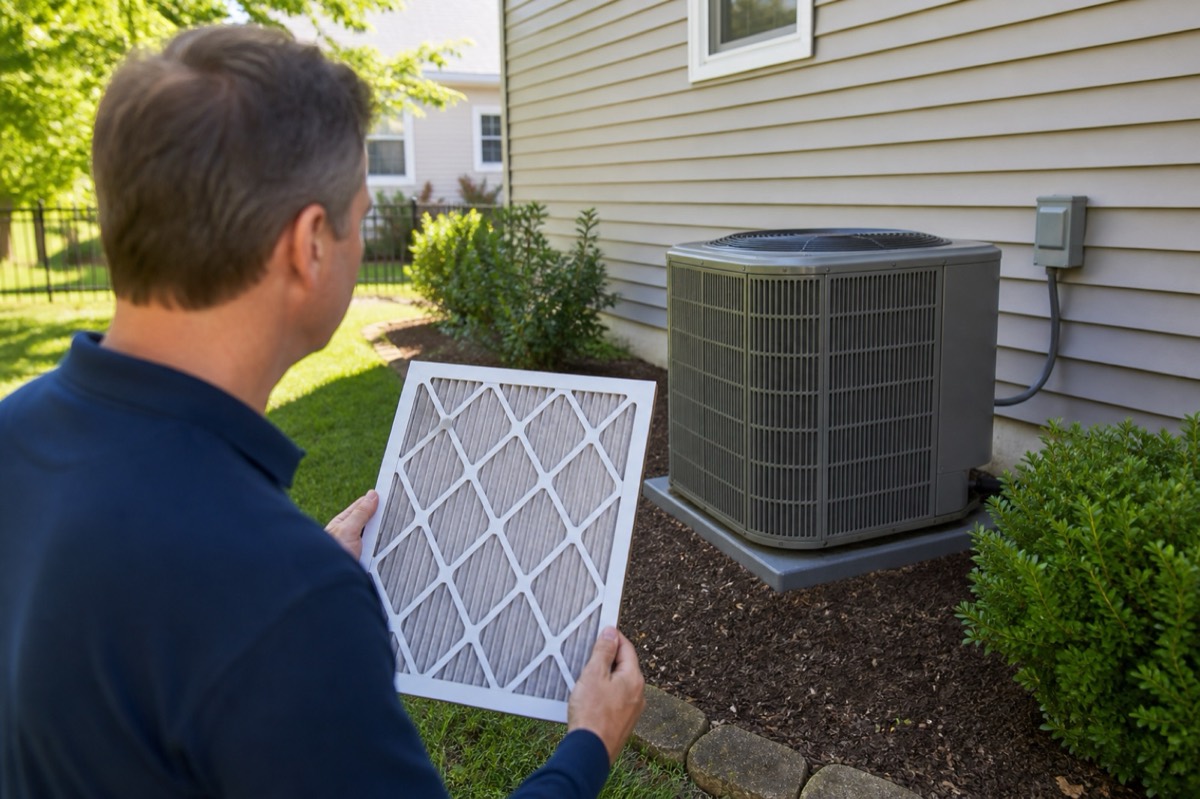
If the AC is not cooling, check the controls and visible symptoms before opening anything. You may find a wrong setting or blocked room vent. Leave wiring, fans, refrigerant lines, and inside parts to a trained technician. If the home is too hot to stay in safely, move to a cool place while you arrange help.
Stop for hazards before checking settings
For smoke, fire, sparks, a gas smell, or a carbon monoxide alarm, get outside and call for emergency help. Do not stay to work through this list. CDC's heat guidance explains when heat illness needs urgent help. Do not wait for the AC if someone seems ill.
Keep away from wet electrical parts, a hot or damaged panel, or a burning smell. Do not touch a plug, breaker, or service switch in an unsafe area.
For a tripped circuit, use our breaker stop-and-call guide. A reset is not proof that the fault is fixed.
Read the thermostat as it is now
Before changing settings, take a photo of the screen. Note the room temperature, target, mode, and any error code.
Check that cooling is selected and the target is below the room temperature. Look for a schedule, away mode, or hold that may override it. Follow the thermostat's instructions for batteries or normal user settings.
After a change, allow the restart delay in the manual. Do not keep switching modes to force a start. If you do not know the thermostat model, note its name for the service call.
Check the air path you can reach safely
Look for furniture, boxes, or rugs blocking supply vents or return grilles. Move loose items only where the floor and surroundings are safe.
A dirty filter can restrict air. Carrier's filter guide says to shut the system down before handling it. Use the manual for your own unit and its owner-accessible filter slot. Do not open a service panel or reach toward a blower.
Our filter size and direction guide helps you record what fits. Do not run without the right filter or assume a new one fixes every cooling problem.
Note where the problem shows up
From safe rooms, compare a few vents. Is air weak throughout the home or just in one room? Does it feel cool, warm, or about like room air?
Write down what you notice. Do not remove grilles or enter an attic to trace ducts. A hot or unsafe attic is not a place for homeowner diagnosis.
From outside at ground level, note whether the outdoor unit seems to run. Stay away from the fan guard. Do not poke it, open the cabinet, or spray electrical parts. A still fan is a symptom, not a diagnosis of which part failed.
Treat water and ice as reasons to pause
If cooling causes an active leak, turn cooling off at a safe normal control. Keep people away from a wet ceiling or electrical area.
Do not bypass a drain float switch. It may be stopping the unit to limit overflow. ENERGY STAR's service checklist includes the drain because a blockage can cause water damage. If you can reach the outside end of the drain line from the ground, you can turn the system off and clear it with a wet-dry vacuum, as Carrier's owner steps show. Leave other drain work to service.
For visible ice, turn cooling off and get service guidance. Carrier's frozen-coil advice calls for addressing the cause, not just melting the ice. Do not chip it or apply heat.
Give the technician a short, useful record
Send this list when you book:
- The model and any error code.
- Room and target temperatures.
- Whether indoor and outdoor units seem to run.
- Filter type and last change date.
- Which rooms have weak airflow.
- Any water, ice, odor, noise, or breaker trip.
- What changed just before the problem began.
Ask for the cause and repair price in writing. If replacement is proposed, ask what evidence shows repair is not the better choice. Do not approve major work based only on the age of the unit.
Keep the next check small
After repair, ask for safe restart steps and the next service date. Save the notes with your seasonal care plan.
ENERGY STAR recommends yearly pre-season service. Your own schedule should also follow the maker's manual and the technician's findings. A short record of changes is useful; repeated home tests of a failing unit are not.
Quick answers
- Can I keep running an AC with ice on it?
- Turn cooling off and call for service. Do not chip or heat the ice. A dirty filter may be involved, but a refrigerant or equipment fault can look similar.
- Should I reset a tripped AC breaker?
- Do not treat a reset as a general repair step. Leave a tripped circuit off and ask for model-specific guidance. Never keep resetting it or approach a wet, hot, or damaged panel.
- What can I check without opening equipment?
- Read the thermostat, look for blocked room vents, and note water, ice, noise, and error codes from safe spots. Handle an owner-serviceable filter only after shutting the system down as its manual directs.
Keep your home plan moving
Get the free Seasonal Home Maintenance Schedule
A seasonal checklist for your roof, gutters, HVAC and more, plus practical homeowner tips. Adjust the schedule for your climate and equipment.
We don't sell your email address. See our privacy policy.
Sources
- HVAC maintenance checklist — ENERGY STAR
- Air filter replacement — Carrier
- Frozen AC coils — Carrier
- Heat and your health — Centers for Disease Control and Prevention