Home › Advice › Heating Cooling › No Heat? Check These 6 Things Before You Call
No Heat? Check These 6 Things Before You Call
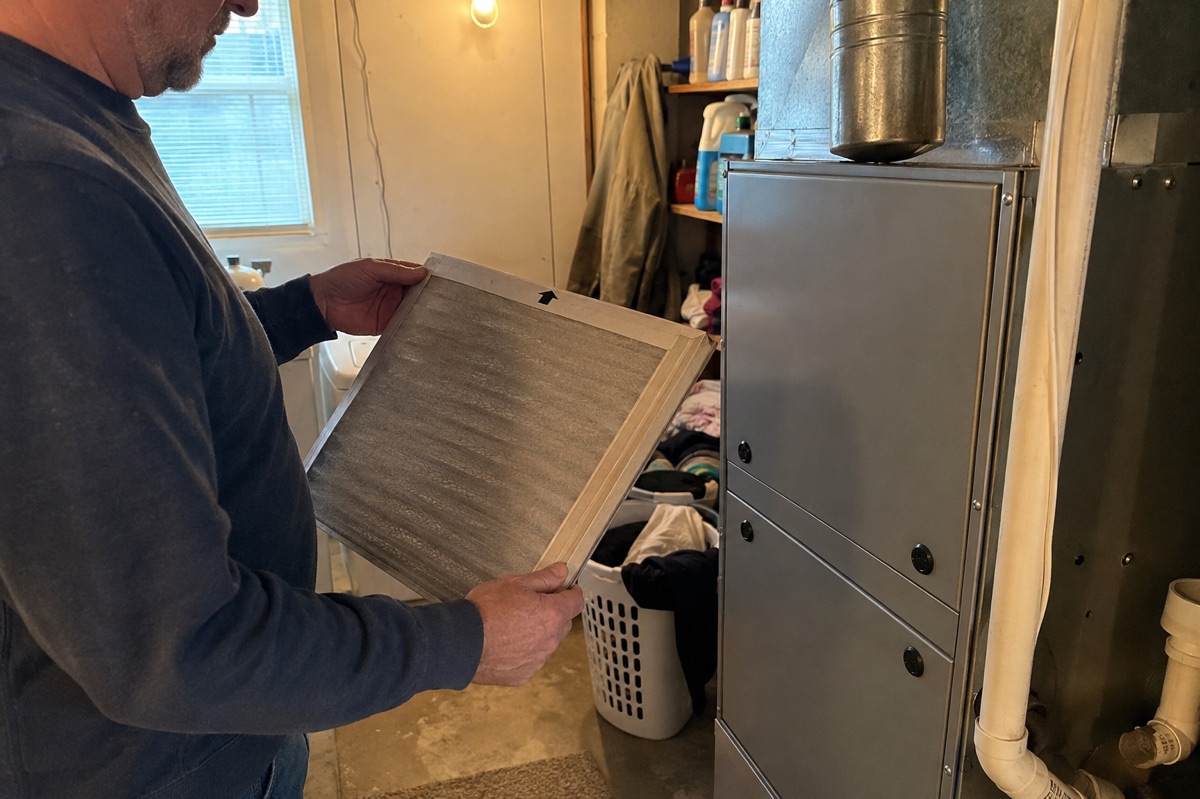
A cold house makes every minute feel longer. Start with six checks that do not require an open panel, a meter, or a guess about fuel or wiring. If the simple checks do not explain the problem, your notes will help the service call go faster.
Leave first for gas or carbon monoxide
Go outside and call emergency services or the gas utility if you smell gas, hear gas hissing, or a carbon-monoxide alarm sounds. Do not search for the source. Do not use a light switch, phone, plug, or flame while you are inside.
Call for urgent help for smoke, sparks, a burning smell, a hot panel, or a breaker that trips again. If the home is too cold for a baby, older adult, sick person, or pet, move them to a safe warm place while you arrange service.
1. Read every thermostat setting
Make sure the thermostat is set to Heat and the set point is above the room temperature. Check for:
- a blank screen or low-battery sign;
- an away, sleep, or vacation schedule;
- a hold that ended;
- the fan set to On when you meant Auto;
- a message or error code.
Give the system the restart time listed in its manual. Many units wait a few minutes on purpose. Do not keep moving the setting up and down.
2. Check the filter and open vents
Look at the filter only if the owner manual shows how. Turn the system off first if the instructions say to do so. Check that the filter is the right size, faces the right way, and is not packed with dust.
ENERGY STAR says a dirty filter makes the system work harder and may harm the equipment. It also advises checking filters each month. Replace or clean yours as the maker directs.
Move rugs, boxes, and furniture away from return grilles and supply vents. Open any vent that was shut by mistake. Never run the system with no filter unless its maker says to.
For more detail, use the HVAC filter size and direction guide.
3. Compare the air in more than one room
Hold your hand near, not inside, a few vents. Note whether the air is cool, warm, or missing. Is the problem in one room or the whole house?
One cold room may point to a closed vent, a door that blocks return air, or a duct issue. Cool air at every vent may point to a control or equipment problem. These are clues, not a diagnosis.
Do not enter a tight attic or crawl space to chase a duct. Heat, loose boards, wiring, insulation, pests, and poor exits can turn that check into a bigger problem.
4. Look at power without opening anything
Check the labeled thermostat, furnace, air-handler, or heat-pump breaker from a dry floor. Follow the equipment manual if it allows one reset.
Stop if the breaker trips again. Do not open a service panel or touch a loose switch, wire, capacitor, or disconnect. The repeated-breaker guide explains why a second trip is a stop sign.
5. Look at the outdoor heat-pump unit
Skip this step if you have no outdoor heat-pump unit. From a safe spot, note whether the fan runs and whether leaves, snow, or debris block the area around it.
Only clear loose material when the power is off and the manual allows it. Keep hands and tools out of the fan guard. A little frost may come and go. Thick ice or ice that keeps building needs a pro. Do not chip it or pour hot water on it.
6. Check the home, not just the machine
Confirm that doors and windows are closed. Look for a new draft or a room that loses heat much faster than the rest. If the system makes some heat but cannot keep up, write down the outdoor temperature and the indoor temperature each hour.
This does not prove the unit is too small. Air leaks, ducts, controls, airflow, maintenance, and equipment faults can feel alike from the couch.
What to tell the HVAC company
Send a short list:
- furnace, boiler, or heat pump if known;
- thermostat mode, set point, and room temperature;
- which parts seem to run;
- air temperature and strength at several vents;
- filter size, condition, and last change date;
- frost, ice, water, smell, sound, or error code;
- any breaker trip and whether it happened again.
Ask for the cause and repair scope in writing. If replacement is proposed, ask how airflow and the home were checked before the new size was chosen. Keep the service record with your seasonal home checklist.
Quick answers
- Why is my heat running but the house is still cold?
- A wrong thermostat mode, a dirty filter, blocked airflow, or an equipment fault can all cause poor heat. Check only the controls and parts the owner manual says you may handle. A pro should test fuel, wiring, motors, burners, refrigerant, and other internal parts.
- Should I keep resetting a furnace or heat-pump breaker?
- No. A breaker that trips again may point to a fault. Stop resetting it and call a qualified HVAC or electrical professional. Heat, smoke, sparks, or a burning smell require faster action.
- Is frost on an outdoor heat pump normal?
- A light coat may appear for a short time in cold, damp weather. Thick ice, ice that keeps growing, or a unit that cannot clear itself needs service. Do not chip the ice or pour hot water on the unit.
Keep your home plan moving
Get the free Seasonal Home Maintenance Schedule
Month-by-month checklist for your state — roof, gutters, HVAC and more. Plus license-lapse alerts for contractors you're considering.
We don't sell your email address. See our privacy policy.
Sources
- HVAC Maintenance Checklist — ENERGY STAR
- Clean Heating and Cooling — ENERGY STAR
- Carbon Monoxide Questions and Answers — U.S. Consumer Product Safety Commission