Home › Advice › Home Emergencies › Find Your Main Water Shutoff Before a Leak
Find Your Main Water Shutoff Before a Leak
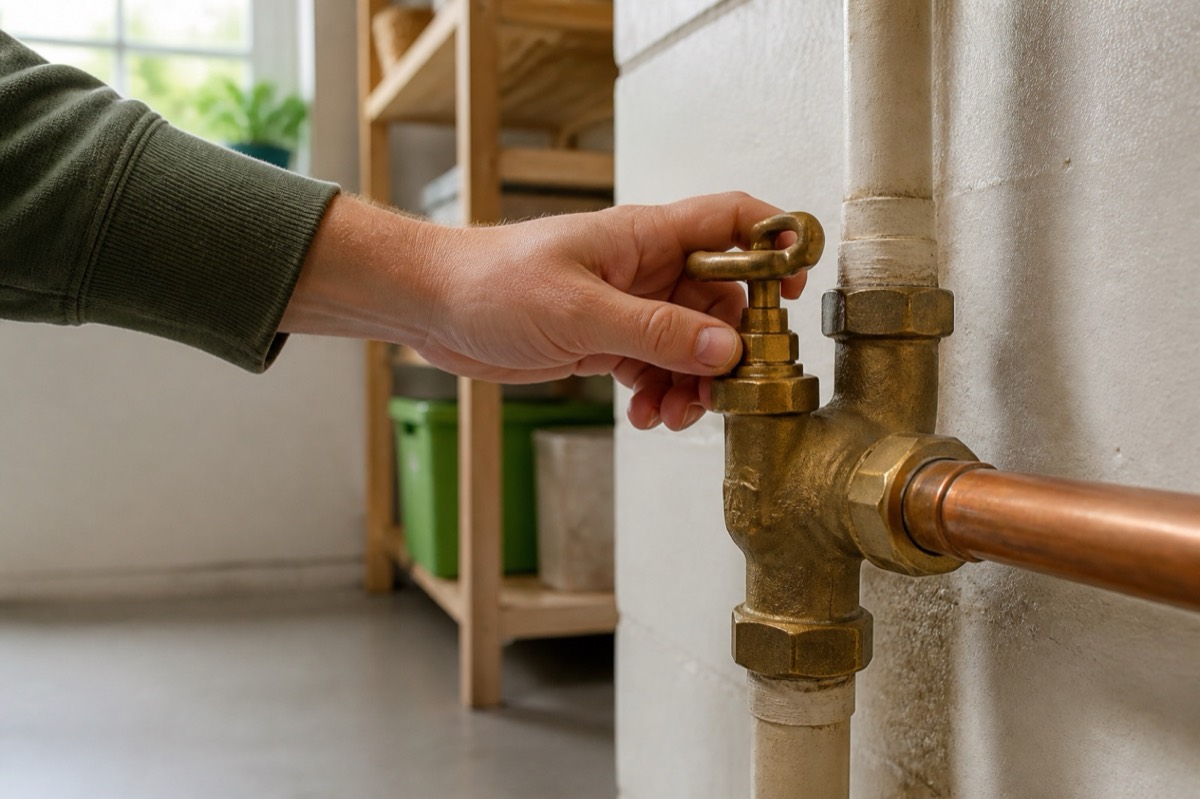
Find your home's main water shutoff on a calm day, not while water spreads across the floor. Label it and save a photo of the route. Ask a plumber or your water utility how to use it safely. A valve you cannot reach, identify, or turn is a repair to plan now.
If water is spreading right now
Keep people clear of wet outlets, cords, lights, and electrical panels. Do not step through water to reach a switch or valve. Leave for smoke, sparks, gas odor, a carbon monoxide alarm, or a risk of collapse. Call emergency services from a safe place for immediate danger.
If there is no such hazard, a known local fixture valve may stop the leak. Use it only if you can reach it safely and know what it controls. Otherwise, use your confirmed main shutoff plan or call the utility or plumber for help.
Do not wait to take photos while water causes more damage. Safety and stopping the source come first.
Find the house valve, not just any large valve
Look from safe, floor-level spots near where the water line enters the home. The valve may be in a basement, garage, utility room, or an outside box. The layout depends on the home and climate.
Do not enter an unsafe crawl space to search. Do not assume the valve by the water heater serves the whole house. Irrigation, pools, and fire sprinklers may have their own lines.
Seattle Public Utilities' shutoff guide shows why owners should know their valve location. Its street-meter steps are local rules, not permission to operate a meter in every city.
Ask your own utility which parts you may touch. Have a plumber label the house valve if there is any doubt.
Make a valve card you can use under stress
Put these facts on one page:
- A photo of the valve and the route to it.
- What the valve shuts off.
- The safe closing and reopening steps for that valve.
- The utility's emergency number.
- The plumber's number.
- Any special steps for a water heater or other system.
Common wheel valves close clockwise. A common ball valve uses a quarter turn. But confirm your valve's method rather than using that rule on unknown equipment.
Do not include a guess on the card. Mark an unknown item as a question for the plumber. The point is to avoid trial and error in an emergency.
Inspect before you plan a test
Look for dampness, crust, rust, a broken handle, or a tight space around the valve. Do not force a stuck valve or add a tool to get more force. It may break or begin leaking.
If a test is safe and approved for your setup, follow the plumber's or utility's steps. Tell the household first. Avoid interrupting appliances or systems that need water.
Ask how the water heater must be shut down before supply is cut. A well, boiler, fire sprinkler, or water treatment unit can also change the plan. Our water heater leak guide explains why power, fuel, and water should not be treated as separate guesses.
Teach the route and keep it clear
Show each capable adult where the valve is. Have them point it out without your help. Keep boxes and stored goods out of the way.
If you rent or share a building, ask the owner or manager who controls the main. Find out whom to call after hours. Do not operate a shared shutoff based only on this guide.
Add a visual check to your home care calendar. That is a reminder to look, not a demand to cycle a worn valve every few months.
Add leak records after the urgent problem is over
EPA WaterSense recommends watching water use and checking leak-monitoring equipment. If you have an automatic shutoff, learn its alarm, battery, and service checks from its manual.
For an unexplained bill, try the two-hour meter check when there is no urgent damage. That test can show water use; it cannot tell you where a leak is.
Save repair receipts and photos with the valve card. After any plumbing work, ask whether the shutoff plan changed. One clear page is more useful than a folder full of old, conflicting instructions.
Quick answers
- Should I turn the valve at the street meter?
- Only if your water utility allows it and tells you how. Some valves belong to the utility. Do not force a lid or valve, or touch equipment you cannot identify.
- What if the main valve is stuck?
- Do not force it or use a longer handle for more force. Call the utility or a plumber. Plan a repair before an emergency if possible.
- Can I test the main valve myself?
- First confirm the valve and method with your utility or plumber. Wells, fire sprinklers, boilers, and water heaters may need a site-specific shutdown plan. Do not test a worn or leaking valve.
Keep your home plan moving
Get the free Seasonal Home Maintenance Schedule
A seasonal checklist for your roof, gutters, HVAC and more, plus practical homeowner tips. Adjust the schedule for your climate and equipment.
We don't sell your email address. See our privacy policy.
Sources
- How to shut off your water — Seattle Public Utilities
- Home maintenance — U.S. EPA WaterSense
- Fix a Leak Week — U.S. EPA WaterSense