Home › Advice › Storm Protection › My Safe Florida Home Grants: Wait for Approval Before Work
My Safe Florida Home Grants: Wait for Approval Before Work
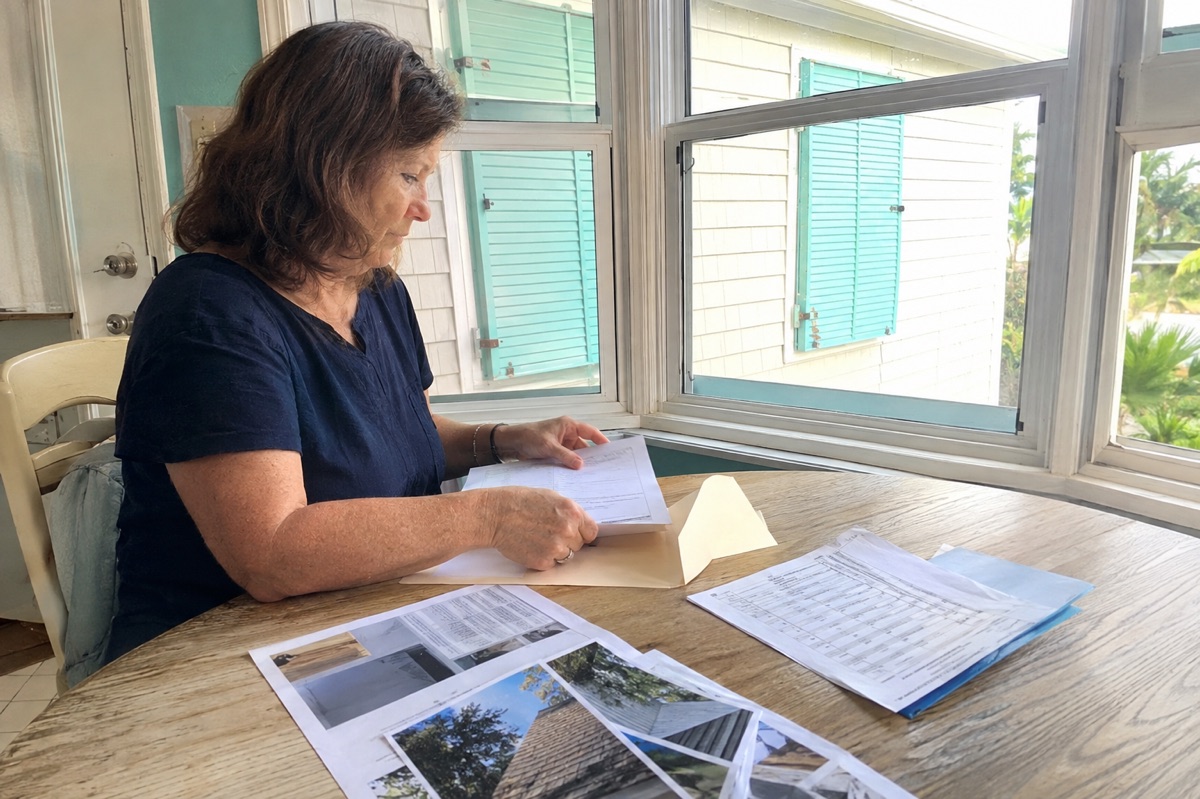
My Safe Florida Home can help pay for approved storm upgrades. But you must get written grant approval before work starts. An application, a free inspection, or a contractor's promise is not approval. Start at the state program, then plan the job around what it approves.
First, separate the inspection from the grant
The program has two steps with different rules. It offers free wind inspections to eligible owners. A grant may then help pay for work the report calls for. You can get an inspection without getting a grant.
Use the state program's application steps to start. The portal uses priority groups. Your age and income can affect your place in line. It is not just a race to click first. Funds and open application groups can change, so check the portal before you make plans.
Keep a folder for state messages. Save the date, your application number, and each next step. A sales flyer is not part of that record.
Check the current home and income rules
Under the 2026 Florida law, grant applicants must have low or moderate income. The program checks the income rules for your household. Do not assume a past year's limit still applies.
Other grant rules include an insured home value of $700,000 or less and a home built before January 1, 2008. You need a program inspection from the prior 24 months. The home must meet the inspection rules too.
Those rules cover a site-built home you own and live in, with a homestead exemption. It must be a single-family unit on its own land parcel. Attached homes can qualify if they are no more than three stories.
The state FAQ still has older wording about townhomes awaiting a signed bill. The 2026 law now includes those attached homes. Ask the program to confirm how the current rules apply to your home and application.
Know what the match does and does not pay
The standard grant pays $2 for each $1 you put toward approved work. The state share tops out at $10,000. For example, $15,000 in approved costs could mean $10,000 from the state and $5,000 from you.
Eligible low-income owners do not have to provide that match. This does not mean any job, at any price, is free. Costs above the award or outside the approved scope can still fall to you.
The program FAQ explains payment proof and the low-income exception. Ask which payment path applies before you sign a loan. Use our home project funding guide to compare the gap you would have to pay.
Put the steps in the right order
Use this stop-and-check list:
- Apply through the state and complete its inspection.
- Read which work the report calls for.
- Get quotes for that work, not a larger sales package.
- Submit the grant application and required contractor details.
- Wait for written grant approval before construction.
- Check the award, scope, and payment rules with the program.
- Have a properly licensed contractor do the approved work.
- Finish the permits, final inspection, and payment request.
The rule to wait applies even if you could pay the full bill yourself. Work done too soon can lose its chance for grant funds.
Before hiring, use our license check steps. Then put the approved work in a clear written contract.
Keep grant money separate from insurance savings
A grant award and an insurance discount are two different decisions. Your insurer uses proof of your home's features to price your policy. A contractor cannot promise either result.
Ask your insurance agent what proof is needed. Use the wind inspection checklist to gather records. The current form has separate ratings for glass openings and doors without glass. A blanket claim that one window erases every discount is too broad.
Check the closeout before you pay
Make a short job file with the approval, quote, permit, invoices, and receipts. Add product details and the final report. Ask the program which items it needs for your grant type.
The FAQ says to finish work and request the final inspection within 18 months of grant approval. Put that date on your calendar. Also watch for requests for missing records.
Your final check is simple: does the finished work match the approved scope? If not, ask the program before assuming the extra cost will be paid. A contractor's verbal yes is not the state's yes.
Quick answers
- Can I start work while my grant application is pending?
- No. For work you want the grant to fund, wait for written grant approval before construction starts. Applying or getting an inspection is not approval.
- Does everyone who gets a free inspection get a grant?
- No. Inspection and grant rules differ. The 2026 law limits grants to low- and moderate-income applicants who meet the other rules. Funding is limited.
- How much of the cost will the grant pay?
- The standard match is $2 from the state for each $1 from you, up to $10,000 from the state. Eligible low-income applicants do not have to provide that match. Only approved costs count.
Keep your home plan moving
Get the free Seasonal Home Maintenance Schedule
A seasonal checklist for your roof, gutters, HVAC and more, plus practical homeowner tips. Adjust the schedule for your climate and equipment.
We don't sell your email address. See our privacy policy.
Sources
- My Safe Florida Home FAQs — Florida Department of Financial Services
- 2026 Florida Statutes: My Safe Florida Home — Florida Senate
- Program application steps — Florida Department of Financial Services
- Wind mitigation resources — Florida Office of Insurance Regulation