Home › Advice › Roofing › Tile Roof Maintenance: Safe Checks and When to Call a Roofer
Tile Roof Maintenance: Safe Checks and When to Call a Roofer
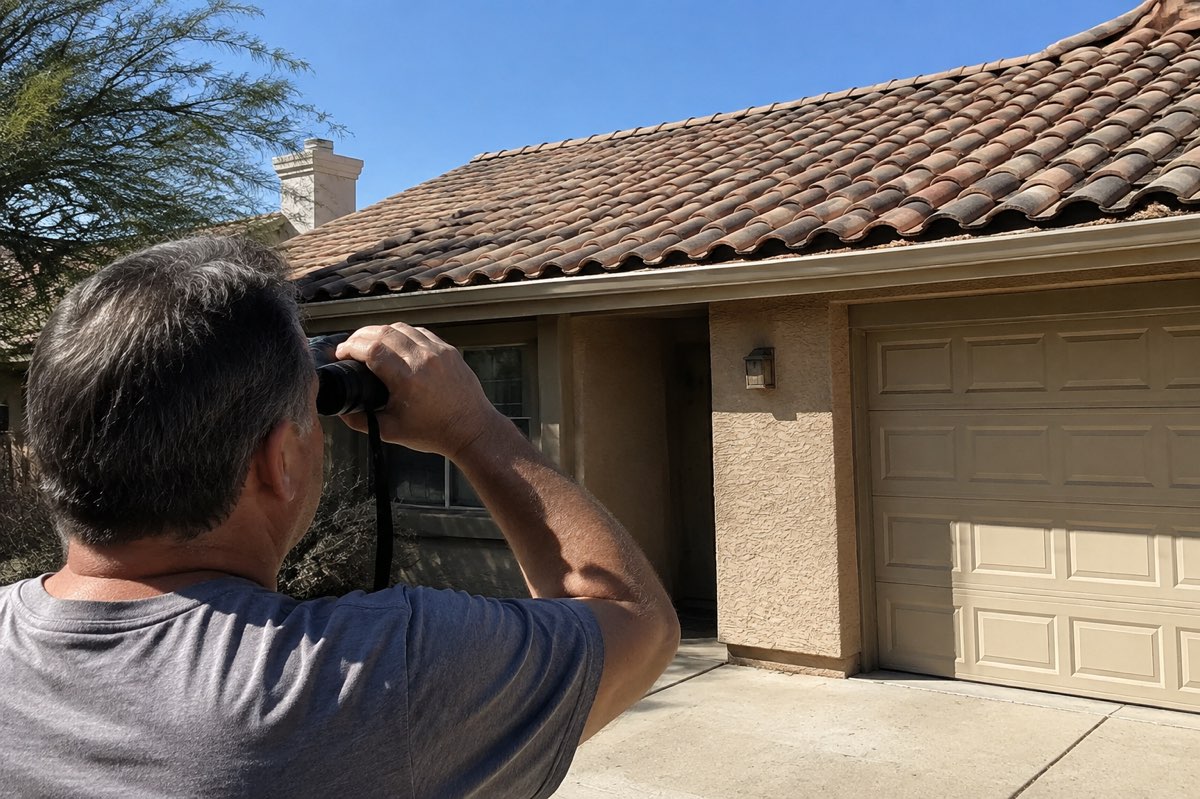
Care for a tile roof without walking on it yourself. Watch for changes from the ground and arrange a trained roofer's check when needed. Sound-looking tiles do not prove that every layer below them is sound. But one broken tile does not prove you need a whole new roof either.
Make a safe ground-level record
Choose a clear view from the ground. Use phone zoom or binoculars if that helps. Look for new gaps, slipped tiles, loose pieces, or branches on the roof. Do not climb a ladder just to improve the view.
Take photos of areas you can see. Keep the date and note which side of the house is shown. You can compare those photos after a storm without trying to diagnose the roof yourself.
Inside, note new ceiling stains, damp smells, or drips. Our ceiling stain guide helps you record changes. Keep out of areas with sagging ceilings or nearby electrical hazards.
Set a check schedule for this roof
Ask the roofer and tile maker what checks your roof needs. Tree cover, storms, prior leaks, roof shape, and access can affect the plan. Put the agreed schedule in your home records.
Eagle Roofing calls for routine professional checks of tiles, drainage, and the roof below them. It does not make a photo from the yard a substitute for that work.
Arrange a check after known damage or a new leak, even if the next planned visit is months away. Use our tile roofer checklist to ask about relevant work and safe access.
Treat broken or slipped tiles as a repair question
Send the roofer clear photos and the date you noticed the change. Ask how soon the area needs attention and what safe temporary work is needed.
A repair plan should state which tiles need work and whether there is damage below. Ask how new tiles will fit the old shape, not just match the color. Keep spare tile details if you have them.
Do not push loose pieces back into place or smear roof cement over them. The right repair depends on the roof system and the cause. A surface patch can hide a problem that still needs attention.
Check water paths without entering them
From the ground, look for overflow, stained walls, or gutters pulling away. Leaves and other debris can affect drainage. The roofer should assess roof valleys and other channels you cannot safely see.
Do not assume every valley should show bare metal. Tile layouts and valley details differ. Ask whether yours matches the intended design and whether water has a clear path out.
Use our gutter and downspout guide for more ground-level checks. Hire a qualified person for work at height. Tell them where overflow occurs and whether it happens only in heavy rain.
Use product-specific cleaning advice
Moss, algae, or dirt calls for a care plan, not a default chemical treatment. Ask the tile maker which methods fit your tile, finish, and warranty. A method approved for one product may not fit another.
Eagle's care guidance recommends professional cleaning and gives limits for its concrete tile. That does not support a blanket rule that every tile roof needs a chemical soft wash.
Ask the cleaner to describe the method in writing. Include runoff control, plant protection, and who handles any broken tiles. Avoid do-it-yourself roof washing; wet surfaces add to the fall risk.
Ask what failed beneath the tile
A leak may involve flashing, joints, underlayment, or the deck. The underlayment is a layer beneath the tile, but its condition cannot be judged from the tile's age alone.
Ask for photos and a plain explanation of the fault. A proposal to lift and reuse tiles should state which can be saved, how breakage is handled, and what new materials go below. Compare that scope with other repair options.
There is no fixed age in this guide at which every tile roof needs new underlayment. Use current evidence from your roof. Keep the repair report, product names, warranty terms, and dated photos for the next check.
Quick answers
- Can I walk on my tile roof to check it?
- Leave roof access to trained people with the right safety gear. Falls and cracked tiles are risks; this guide does not teach roof walking.
- How often should a tile roof be checked?
- Set a schedule with the roofer and product maker. Add a check after damage, a leak, or a major storm rather than waiting for the next routine visit.
- Do sound-looking tiles prove the roof is sound?
- No. Flashing, fasteners, the deck, or layers below the tile may need work. Ask for evidence before choosing a repair or replacement.
Keep your home plan moving
Get the free Seasonal Home Maintenance Schedule
A seasonal checklist for your roof, gutters, HVAC and more, plus practical homeowner tips. Adjust the schedule for your climate and equipment.
We don't sell your email address. See our privacy policy.
Sources
- Concrete tile roof maintenance — Eagle Roofing Products
- Concrete and clay roof tile installation manual — Tile Roofing Industry Alliance