Home › Advice › Roofing › Flat Roof Systems Explained: TPO, EPDM, Modified Bitumen, and SPF
Flat Roof Systems Explained: TPO, EPDM, Modified Bitumen, and SPF
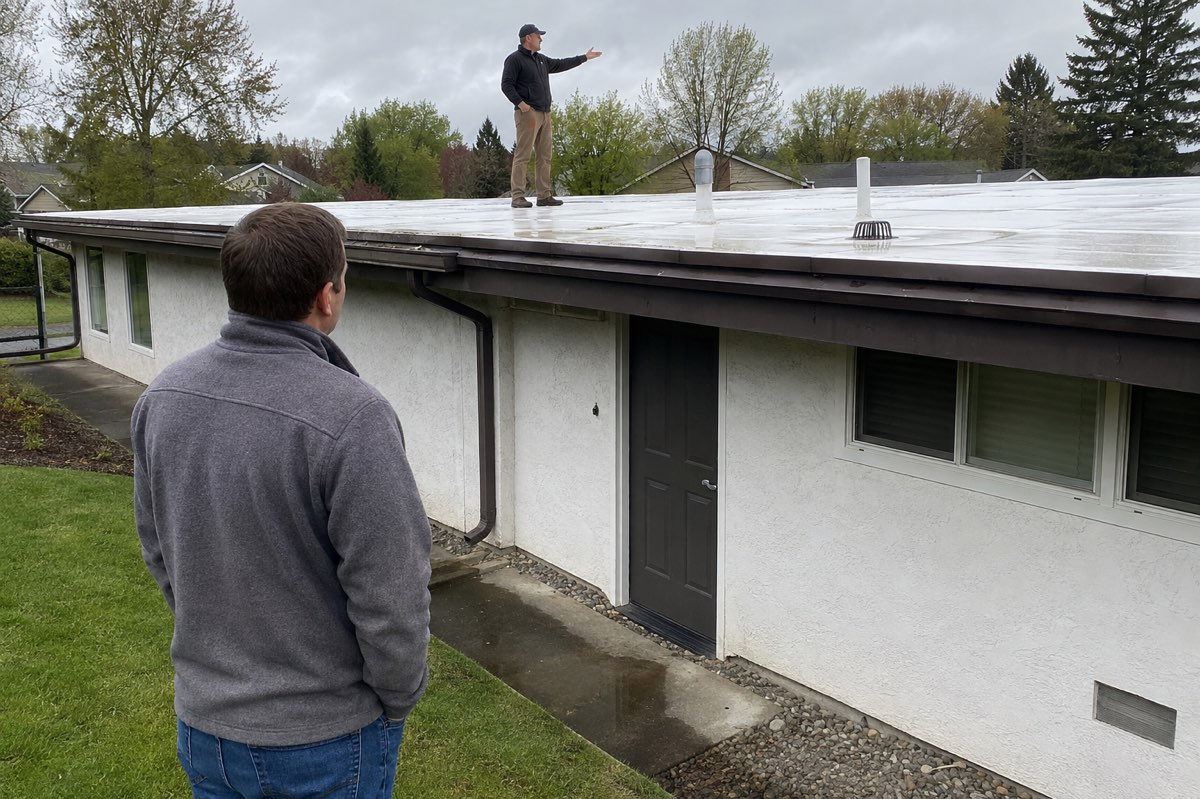
TPO, EPDM, modified bitumen, and spray foam are different ways to cover a low-slope roof. The right choice depends on the whole roof: deck, drains, insulation, seams, edges, and use. Ask for a complete plan. A material name alone cannot tell you how well a roof will work.
Start with drainage and roof condition
“Flat” roofs still need a way to shed water. Ask where rain drains and what happens if the main drain is blocked. Have a qualified roofer check low spots, outlets, and overflow paths.
NRCA warns that water left on a roof beyond 48 hours can be harmful. That is a reason for assessment, not proof of a leak or a void warranty. Product terms and site conditions still matter.
Do not climb onto a wet roof to measure a puddle. Take dated photos from a safe spot if you can. Note when rain stopped and report leaks or sagging at once. See our roof leak first steps for safe indoor actions.
TPO uses heat-welded seams
TPO is a sheet roof membrane. GAF's product guide describes heat-welded seams. A crew joins the sheet edges with the tools and method set out for that system.
Ask for the maker, product, sheet thickness, and attachment plan. Also ask how the crew will check seams and build joints around drains and vents. A good bid names those details instead of saying only “white roof.”
Color is not a full energy plan. Ask about insulation, the roof assembly, and local needs before accepting a claim about bill savings.
EPDM uses a different seam system
EPDM is a rubber membrane. Carlisle lists products with seam tape, including factory-applied tape options. Do not assume it is joined like TPO just because both come in sheets.
Ask which seam products and repair materials belong with the quoted roof. Get the maker's details for edges and wall joints. Tell the roofer about rooftop equipment and any past patches.
Neither the color nor the age of the product category proves which roof is best for your home. Compare each full design, its care needs, and the crew's work with that exact system.
Modified bitumen uses asphalt-based sheets
Modified bitumen systems use asphalt-based sheets in a planned set of layers. GAF lists different system details, including heat-welded types. The method depends on the product; not every job uses a torch.
Ask the roofer to name each layer and how it is applied. If hot work is proposed, ask about fire precautions, site access, and insurance. That is a job for a trained crew, not a homeowner patch project.
Get details for the surface finish, drains, wall edges, and any walkway areas. Ask what care the finished system needs and what might damage it.
Spray foam needs a protective surface
SPF means spray polyurethane foam. The Spray Polyurethane Foam Alliance says roofing foam needs a protective coating against sunlight and routine surface damage.
Ask who applies both the foam and the coating. Have the bid name the products, planned thicknesses, and inspection steps. Ask how the crew controls overspray near cars, walls, and nearby homes.
Get a written care and recoating plan for the chosen system. Do not accept a generic promise that foam never needs service. Also ask how a later trade should cross the roof without damaging it.
Compare repair, overlay, and replacement
A low-slope roof may need a local repair, larger work, or replacement. Ask the roofer to show the evidence for each option. A moisture check may help, but the right test depends on the roof.
For an overlay, ask about existing layers, wet areas, added weight, deck condition, code, and warranty rules. A new top layer should not be sold as a way to ignore known problems below.
Use our quote comparison guide to line up bids. Then check the contract terms for hidden damage, change orders, cleanup, and final checks. Get a roof-specific service plan and leave roof access to trained people.
Quick answers
- Is TPO always better than EPDM?
- No. Compare complete systems for the roof's use, drainage, climate, and repair needs. Ask each roofer to explain the choice.
- Can a new flat roof go over the old one?
- Sometimes, but it needs a roof assessment and code check. Existing layers, wet materials, deck condition, and product rules can limit that option.
- What does water left after rain mean?
- It is a reason to have drainage checked. NRCA warns that water remaining beyond 48 hours can harm a roof; it is not proof by itself that every roof has failed.
Keep your home plan moving
Get the free Seasonal Home Maintenance Schedule
A seasonal checklist for your roof, gutters, HVAC and more, plus practical homeowner tips. Adjust the schedule for your climate and equipment.
We don't sell your email address. See our privacy policy.
Sources
- TPO roofing membranes — GAF
- EPDM membranes — Carlisle SynTec
- Roof system specifications — GAF
- Spray foam roofing questions — Spray Polyurethane Foam Alliance
- Roof drainage position paper — National Roofing Contractors Association