Home › Advice › Roofing › How to Choose a Tile Roofing Contractor
How to Choose a Tile Roofing Contractor
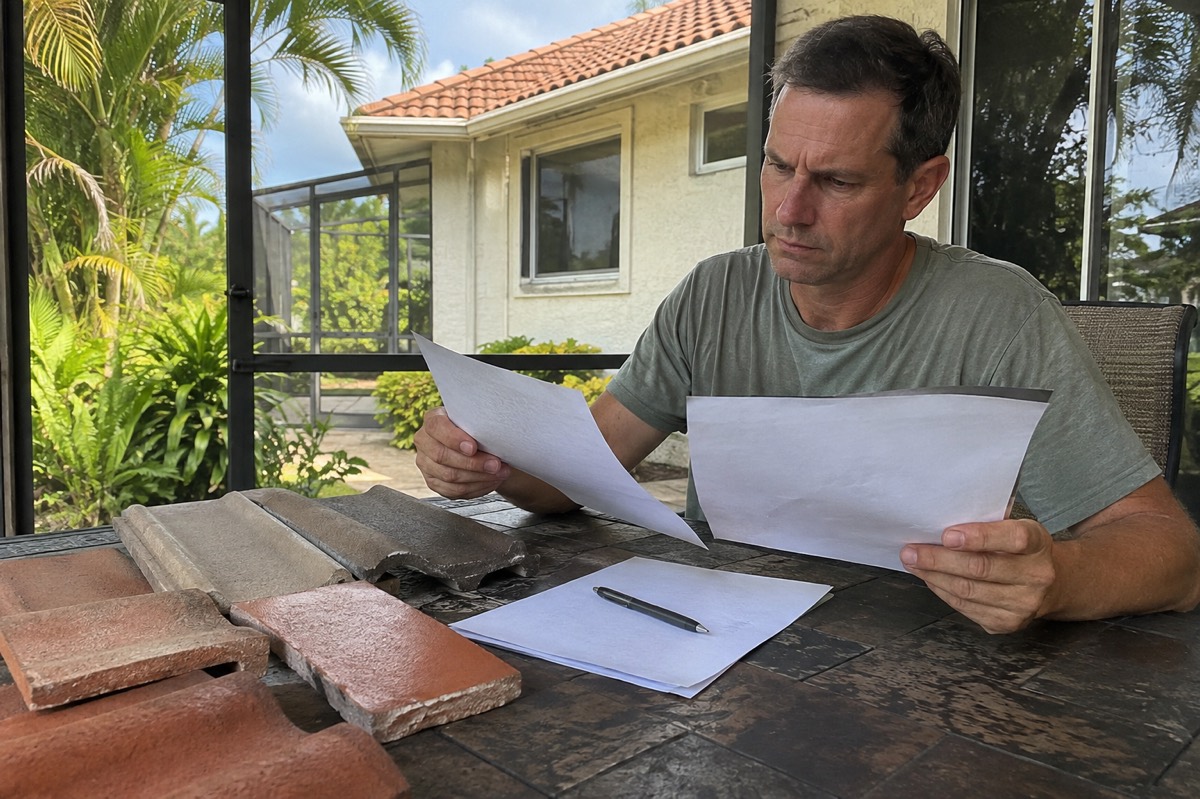
Choose a tile roofer who can show relevant work and explain the whole roof system. Tiles, the layers below, flashing, and fasteners all need a plan. Check the business records too. A trade logo or license alone does not prove that the crew can build or repair your tile roof.
Verify the business and exact credential
Get the legal name that will appear on the contract. Check its required license, status, and scope through the proper authority. Our license check guide explains the state differences.
Texas has no state roofing license. RCAT runs a voluntary program, but RCAT membership and an RCAT license are separate. Ask which one the roofer holds and verify that claim with RCAT.
Confirm insurance through the agent or insurer. Ask who will do the work if the seller uses a separate crew. Record that firm's role and who is responsible for the job. Do not treat a logo on a bid as proof of all these facts.
Ask for recent tile work
Request jobs that match your needs: a new tile roof, a local leak repair, or work beneath tiles that will be reused. Those are not the same scope.
Ask for photos and references with the owners' consent. Ask who led those jobs and who will lead yours. Find out how the firm handled a leak or a return visit, not just whether the roof looked good at handover.
Training from a tile maker or trade group can be useful evidence. Check its name, current status, and what it covers. A course or badge does not guarantee the quality of your job.
Get a plan for weight and support
If the work changes the roof's weight, ask who will assess the structure. Do not assume a roof that held shingles can hold every tile system. Nor should a seller judge support from a driveway photo.
Have the bid state any needed design or engineering work. Ask how permits and site-specific wind requirements will be handled. Let the qualified designer and permit office resolve those points.
The Tile Roofing Industry Alliance manual covers roof-system details, not just tile appearance. Ask which maker's instructions and local rules apply to the exact product in the bid.
Read the layers and water details
Get the tile maker and model, underlayment, flashing, and fastening method in writing. Underlayment is the layer beneath the tile. Its expected service depends on the product and the roof, not one age rule for all homes.
Ask for details at valleys, roof edges, walls, and vents. If parts will be reused, ask how their condition will be checked. Get a photo-backed explanation of any claimed fault.
Read our tile roof care guide to see why good-looking tiles can still hide other repair needs. For a leak, ask what evidence supports the proposed repair before agreeing to broad replacement.
Agree on access and tile breakage
Leave roof access to trained crews. Ask how workers will reach the roof and protect tiles during the job. Eagle Roofing advises professional care because walking on roof tile is hazardous.
A reuse plan needs more detail than “save all tiles.” Ask how sound tiles will be sorted, where they will be stored, and how missing pieces will be matched.
Put responsibility for breakage in the contract. Do not assume the homeowner or the roofer pays by default. State how extra material is priced and what happens if a matching tile is no longer available.
Compare the scope before the price
Use our roof quote guide to line up bids. Include removal, storage, deck repairs, new layers, tile work, waste, and permits. Mark each excluded item.
Ask how hidden damage changes the price. Require a clear method and written approval for added work. Check state deposit rules and the payment stages before you sign.
Get the care plan and separate product and labor warranties. Keep the final bid, photos, permits, and product records together. The goal is a crew with evidence and a clear plan, not a seller who gives the fastest answer to every question.
Quick answers
- Does RCAT membership mean the roofer holds an RCAT license?
- No. RCAT says membership and its voluntary license program are separate. Check the exact credential rather than treating a logo as proof.
- Can sound tiles be reused?
- Sometimes. Ask for a roof-specific assessment and a written plan for sorting, matching, and breakage. Sound-looking tiles alone do not prove that reuse is suitable.
- Does a roofing license prove tile experience?
- No. Check the license where required, then ask for recent tile jobs, training, and the people assigned to your work.
Keep your home plan moving
Get the free Seasonal Home Maintenance Schedule
A seasonal checklist for your roof, gutters, HVAC and more, plus practical homeowner tips. Adjust the schedule for your climate and equipment.
We don't sell your email address. See our privacy policy.
Sources
- Concrete and clay roof tile installation manual — Tile Roofing Industry Alliance
- RCAT membership and licensing are separate — Roofing Contractors Association of Texas
- Texas voluntary roofing license program — Roofing Contractors Association of Texas
- Concrete tile care — Eagle Roofing Products