Home › Advice › Roofing › Slate Roof Repair: Why a Slate Specialist Matters
Slate Roof Repair: Why a Slate Specialist Matters
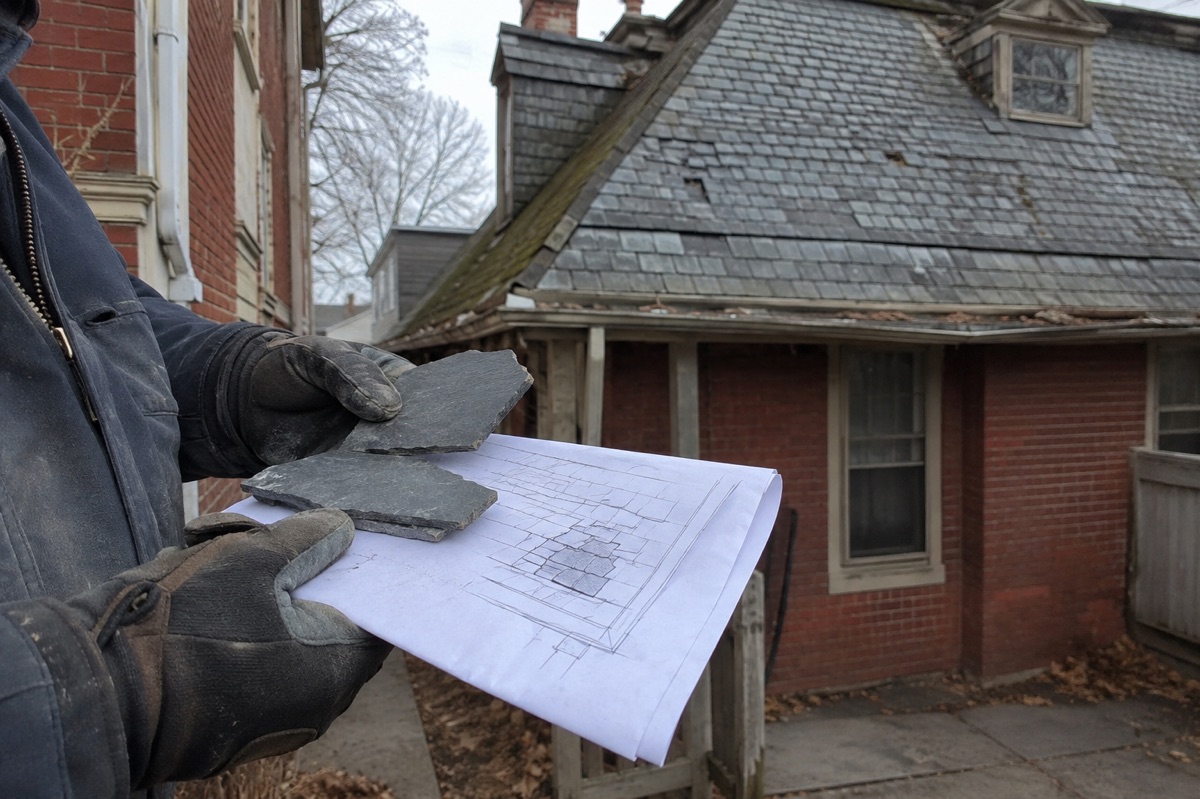
Hire for proven slate work, not just general roofing experience. A slate roof may need local repairs rather than full replacement. It may also have faults that a patch will not solve. Ask a specialist to show the damage, explain the cause, and compare sound repair options.
Check that the roof is natural slate
Natural slate is stone. Some newer products copy its look but use other materials. Those roofs need their own maker's repair method. Find any old bills, product records, or spare pieces you already have.
Do not climb up or pull out a tile to identify it. Send the roofer safe photos and any records. If the product is unclear, ask them to identify it as part of the visit.
Tell the roofer about leaks, loose pieces, and past repairs. Date those notes. A leak that appears near one room does not, by itself, locate the fault on the roof.
Ask for slate-specific proof
Request examples of recent jobs on natural slate. Ask what the crew repaired and how closely it matched the old roof. Get client references with the owners' consent.
Ask who will assess the roof and who will lead the repair. A firm may use a skilled specialist or another crew. You need to know which people are assigned to your job.
Use our license guide to check the legal scope where required. Confirm insurance through its agent. A valid license and a slate portfolio answer different questions; neither replaces the other.
Get a condition report before a big decision
The National Park Service's slate brief treats repair and replacement as a roof-specific choice. It calls for attention to the stone and other parts of the roof. Age alone is not enough to decide.
Ask the roofer to check slate condition, fixings, flashing, and the deck. Have them mark isolated faults apart from widespread damage. Ask what they could not inspect and why.
Do not accept “slate lasts forever” as a reason to delay a leak. Nor should a few broken pieces alone prove that every part must come off. Get prompt advice if pieces fall, the roof sags, or water enters.
Ask how the repair will fit the roof
A repair should match more than color. Ask how the new slate fits the old size, thickness, layout, and exposure. The plan should name the fastening method and any work at roof joints.
NPS warns against surface patches made with roof mastic on slate. Such a patch is not a substitute for addressing a failed piece or joint. Ask the roofer to explain any proposed sealant and its role.
Do not use this guide as a roof-walking or slate-removal lesson. Leave access and repair to trained workers with proper safety gear. Agree on how nearby stone will be protected during the job.
Compare repair with replacement fairly
Ask for the evidence behind each choice. Repair may be sensible where faults are local and the surrounding roof is sound. Broader damage, unsafe structure, or poor past work can change that decision.
A replacement bid should say why repairs are not enough. It should also name any design changes and permits. If the house has historic status, ask the local office about review rules before changing the roof.
Use our roof quote guide to compare scope. List access costs, old material removal, matching slate, flashing work, and hidden deck repair terms. Do not treat a missing line as a free service.
Keep a repair record and care plan
Ask for before-and-after photos from the crew. Keep the slate details, repair map, invoice, and warranty. If spare slate is left, ask how and where to store it safely.
Set a check schedule with the specialist. Add a visit after known damage or a new leak. A long-lived material still needs care, and it does not promise years of warning before a fault.
Read our contract checklist before signing. Make sure one named firm is responsible for the scope, cleanup, and call-backs. That clear record is more useful than a broad claim that a roof will last for generations.
Quick answers
- Can a general roofer repair slate?
- Some can. Ask for recent natural slate jobs, references, and a clear repair plan. The business label alone does not prove or rule out the skill.
- Does a slate leak mean the whole roof must go?
- Not always. A leak can come from a local fault. A slate specialist should assess the stone, fixings, flashing, deck, and wider roof condition.
- Is roof cement a lasting slate repair?
- NPS warns against using roof mastic to patch slate. Ask for a repair that fits the roof and addresses the fault, not just a smear over the surface.
Keep your home plan moving
Get the free Seasonal Home Maintenance Schedule
A seasonal checklist for your roof, gutters, HVAC and more, plus practical homeowner tips. Adjust the schedule for your climate and equipment.
We don't sell your email address. See our privacy policy.
Sources
- Preservation Brief 29: Historic slate roofs — National Park Service
- Avoid home improvement scams — Federal Trade Commission