Home › Advice › Roofing › Metal vs. Shingle Roof: Which Is Right for Your Home?
Metal vs. Shingle Roof: Which Is Right for Your Home?
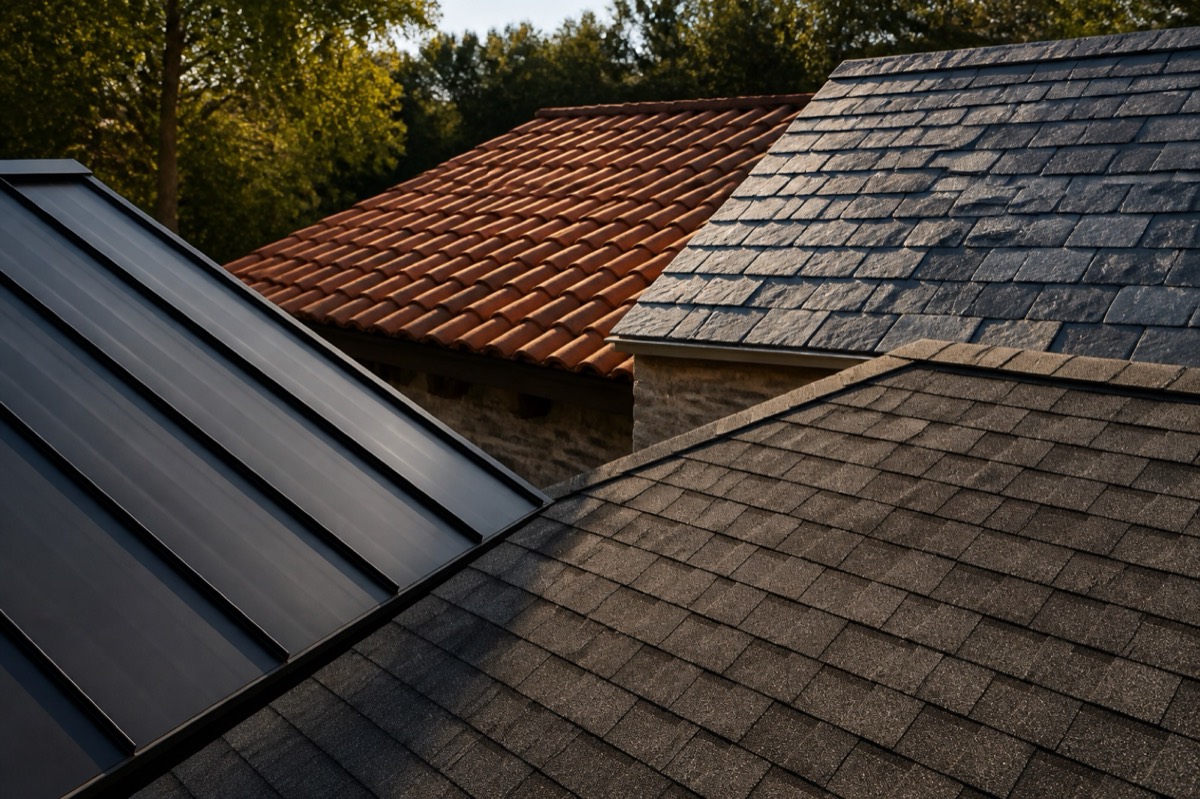
Choose between metal and asphalt shingles by comparing two complete roof plans for your home. Price matters, but so do roof slope, local rules, upkeep, and the written warranty. Neither material wins every job. Do not buy metal on a fixed payback promise, or pick shingles on price alone.
Start with the roof you have
Give each bidder the same facts. Note known leaks, past repairs, and any solar panels. Tell them if you plan to change gutters or add a roof vent. Ask each roofer to measure the roof, not use your home's floor area as its roof size.
Some roof sections may need a different system from the main roof. A low-slope porch is one example. Ask what products fit each slope and how the parts will join. Our flat roof guide explains why that detail matters.
Keep the current roof's condition separate from your style choice. If a leak needs prompt care, arrange a safe repair while you review larger bids.
Compare specific products, not broad labels
A metal bid should name the panel, base metal, finish, and fasteners. An asphalt bid should name the shingle and the parts used with it. “Premium roof” tells you little.
Sheffield Metals lists clip, nail-flange, and exposed-fastener designs. Not every standing-seam roof uses hidden clips. Ask the roofer to explain the exact design in the bid.
For both roof types, ask what is planned at walls, valleys, vents, and edges. Those details are part of the roof system. A material sample cannot show you how those joints will be built.
Get current prices for the same scope
Broad online ranges are planning aids, not bids for your house. Prices can cover different roof sizes and job scopes. Do not compare one figure for materials with another for a finished job.
Use the metal cost and quote guide for scope questions. Then get local, written bids for both options. Ask how long each price is valid and which costs could change before work starts.
Our roof quote worksheet helps line them up. Make each firm name tear-off, deck repair terms, permits, waste removal, and work on roof joints. Mark missing items as unknown, not free.
Do not assume a fixed payback
A more costly roof does not pay for itself on a set date. Your result depends on the price gap and what each roof costs to own. A future buyer may value the roof, but that is not a guaranteed refund of the premium.
Write down your likely time in the home. Then ask each bidder for the upkeep plan and known service costs. Keep guesses about future repairs separate from quoted costs.
Do the same with energy or insurance savings. Ask your utility or insurer about your exact home and product. Do not subtract a sales estimate from the price unless you can verify it. Roof material alone does not prove a wind credit or a lower bill.
Compare care and warranty terms
Ask what checks the maker calls for, who can do them, and what records to keep. For metal, ask about fasteners, coatings, and any sealants in the chosen system. For shingles, ask about vents, flashing, and damage checks.
Read the warranty itself. GAF's warranty chart shows that coverage can change by product and program. Some plans include covered workmanship; others focus on material defects. Terms for one brand do not speak for all roofs.
Our warranty guide explains these separate promises. Check labor, leak damage, transfer rules, and the steps to file a claim.
Choose the roof plan you can verify
Get proof that the crew has built the quoted system before. Ask who will lead your job and handle a call-back. A license is one check, not proof of product skill.
Put the two bids side by side. Circle unclear items and send the same questions to both firms. Choose only after scope, price, care, and warranty terms are clear. If a key claim rests on a sales promise, ask for its written source.
Quick answers
- Will a metal roof pay for itself in ten years?
- There is no fixed payback. It depends on local bids, upkeep, repairs, how long you keep the home, and any resale value you can support.
- Is standing seam the same as clip-fastened metal?
- No. Standing-seam systems can use clips or nail flanges. Compare the exact panel and fastening plan in each bid.
- Which roof has the best warranty?
- Compare the actual contracts. A finish or material warranty is not the same as a promise to pay for leak repairs or labor.
Keep your home plan moving
Get the free Seasonal Home Maintenance Schedule
A seasonal checklist for your roof, gutters, HVAC and more, plus practical homeowner tips. Adjust the schedule for your climate and equipment.
We don't sell your email address. See our privacy policy.
Sources
- Metal roof fastener systems — Sheffield Metals
- Residential roof warranty comparison — GAF
- Metal roof cost guide — HomeGuide