Home › Advice › Pests › How Mice Get Inside: A Room-by-Room Gap Check
How Mice Get Inside: A Room-by-Room Gap Check
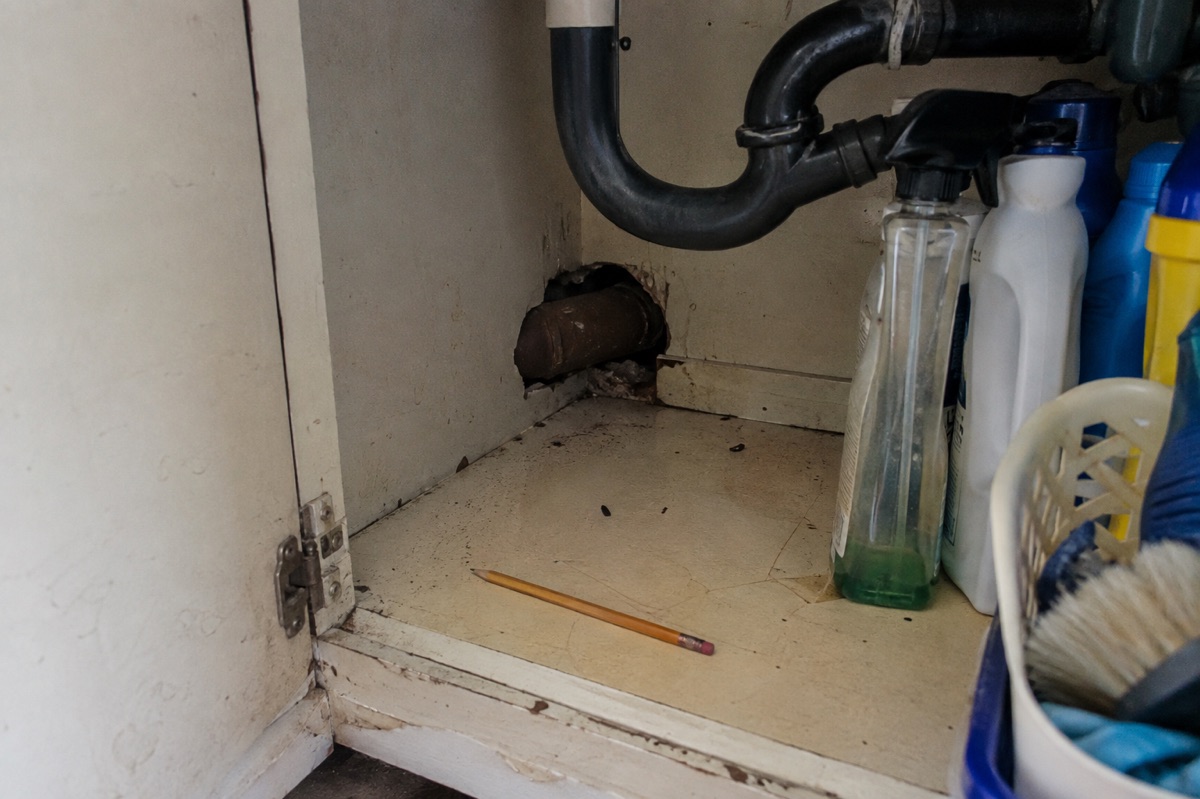
Mice do not need a cartoon-sized hole. CDC says one can fit through a gap about as wide as a pencil: one-quarter inch. The best search is slow, low, and done in the same order each time.
Before you start, do not sweep droppings
If you find urine, droppings, or a nest, stop. Do not sweep or vacuum it dry. Use the CDC-led rodent cleanup guide before you move boxes or disturb the area.
Wear work gloves for the building check, use a flashlight, and keep children and pets out. Do not reach into a dark hole. Do not enter an attic or crawl space that is tight, hot, wet, damaged, or hard to exit.
Start in the kitchen
Open only easy-to-reach cabinets. Look:
- around pipes under the sink;
- behind the trash can;
- at the floor and wall joint;
- beside the dishwasher and stove;
- behind the refrigerator if it can be viewed without moving it;
- inside low corners and toe-kick gaps.
Note crumbs, pet food, water drips, gnaw marks, shredded paper, and dark rub marks. A gap plus food and water gives a mouse a reason to stay.
Do not pull a heavy appliance alone. Use your phone camera to look behind it from a safe gap.
Check the laundry and utility area
Pipes and vents make built-in paths through walls. Check around:
- washer supply and drain lines;
- dryer vents;
- water-heater pipes;
- furnace or boiler pipes;
- floor drains;
- cable, gas, and electrical lines.
Do not seal a gap around a hot flue, gas line, electrical part, drain, or vent until the right trade confirms the safe material and clearance. Fire and airflow rules matter.
Walk the doors, closets, and living rooms
Look at the bottom corners of outside doors. Daylight under a door is an easy clue. Check damaged weather stripping, loose thresholds, fireplace edges, floor vents, and closet corners.
A pencil is a simple size guide, but do not push it into a hole. Mark the spot with painter's tape nearby and take a photo.
Look up in the attic—only from a safe access point
CDC tells homeowners to check eaves, soffits, gables, rafters, and attic vents. You may be able to see signs from the hatch or from the ground outside.
Do not walk on exposed ceiling drywall. Do not work near loose insulation or wiring. A pest or wildlife pro can inspect places you cannot reach safely.
Walk the outside wall
Start at one corner and move in one direction. Check:
- the line between the foundation and siding;
- utility pipes and cables;
- crawl-space and attic vents;
- door frames and garage corners;
- damaged siding or mortar;
- the roof edge, soffit, and eaves from the ground.
Do not climb a ladder just to inspect a roof gap. Zoom your phone camera or use binoculars.
Keep garbage lids tight. Move pet food inside after use. Clean grill grease and spilled seed. Trim thick weeds and brush near the wall. These steps remove food, water, and shelter while you work on the gaps.
Match the patch to the hole
CDC suggests steel wool held with caulk for some small holes. Larger holes may need hardware cloth, metal, cement, lath screen, or another durable material.
The right repair depends on the surface and what passes through it. Do not block a dryer vent, drainage path, combustion-air opening, or weep hole. Do not stuff material against hot equipment or bare wiring.
If mice are already inside, pair exclusion with trapping and checks. Sealing every path without a plan may leave animals in a wall or room. A pest professional can help with active or hard-to-reach entry.
Make a one-page gap map
List each spot, room, size, photo, nearby food or water, repair material, and check date. Recheck it after one week and again after one month.
Use the ants and roaches IPM plan for the same food-water-shelter approach with insects. Add the outside walk to your seasonal maintenance list so a small opening does not have years to grow.
Quick answers
- How small a hole can a mouse fit through?
- CDC says a mouse can fit through a hole about the width of a pencil, or one-quarter inch. Check both small gaps and larger damaged openings inside and outside the home.
- Where should I look for mouse entry points first?
- Start around pipes under sinks, behind appliances, at door bottoms, along the foundation, around utility lines, and near attic, crawl-space, dryer, and roof vents.
- What should I use to close a mouse hole?
- CDC suggests steel wool held with caulk or spray foam for some small holes, and hardware cloth, metal, cement, or other durable repairs for larger holes. Match the repair to the surface and do not block a needed vent or drain.
Keep your home plan moving
Get the free Seasonal Home Maintenance Schedule
Month-by-month checklist for your state — roof, gutters, HVAC and more. Plus license-lapse alerts for contractors you're considering.
We don't sell your email address. See our privacy policy.
Sources
- How to Seal Up to Prevent Rodents — Centers for Disease Control and Prevention
- How to Clean Up After Rodents — Centers for Disease Control and Prevention