Home › Cost Guides › Roofing Costs › Metal Cost
Metal Roof Cost Factors & Quote Planning
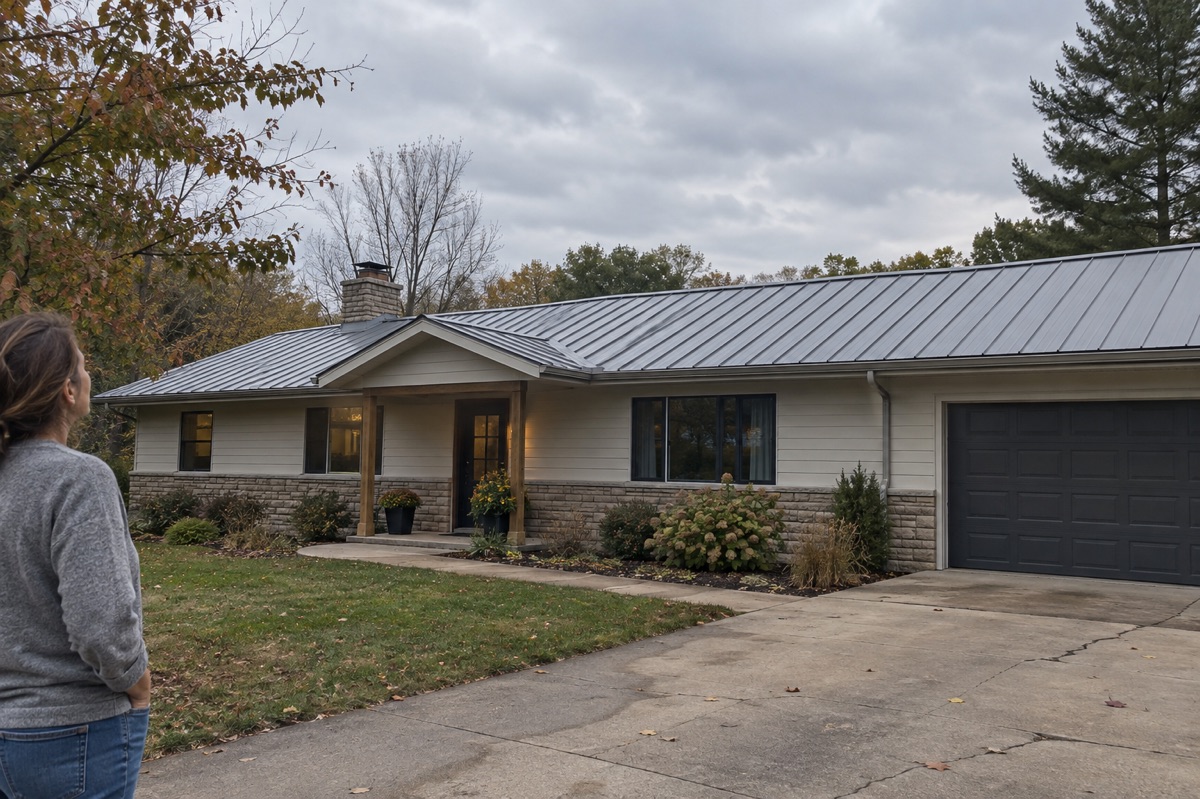
Metal roof bids can cover very different systems. Some panels have exposed screws; others hide fasteners with clips or a fastening flange. Ask each bidder to name the panel, metal, thickness and finish. This guide helps you compare scope.
This is a planning checklist, not a price list. We don't list prices for this job. The cost depends on your roof's size, shape, and condition and on where you live. The number you can trust is a written quote for your home. Use the factors below to plan the work and to compare quotes for the same job.
What drives the price
- Panel and attachment: identify exposed screws, concealed clips or a fastening flange, plus the exact product.
- Metal, thickness and finish: compare these on every bid rather than comparing only the word metal.
- Roof shape: ask bidders to measure hips, valleys, skylights, chimneys and other details.
- Removal and deck work: list disposal, deck inspection and the process for pricing hidden damage.
- Trim and flashing: name the materials and details at walls, edges and penetrations.
- Local approvals: ask who confirms wind requirements, permits and inspections.
- Access: steep slopes, tight staging areas and protection for landscaping should be in the scope.
Lifespan, weight, and performance
Lifespan: Ask for the product warranty and the installer’s care plan. A warranty term is not a promise that the roof will last that long. Exposed screws, seals, flashings and other parts may need service. Concealed fasteners do not make a roof maintenance-free.
Structural weight: The complete roof assembly matters, not just the panels. Ask whether the existing deck and framing can carry the proposed system, especially if old roofing will stay in place. The contractor must check the product instructions and local rules before proposing an overlay.
Weather performance: Wind, fire and impact ratings apply to tested systems and installation details, not to all metal roofs. Ask for the approval that matches the panel, fasteners and roof conditions in your bid. Check your policy for any cosmetic hail-damage exclusion; do not assume an insurance discount.
Common questions
- Why do metal roof quotes differ?
- First check whether the products and scope match. Compare the panel profile, metal, thickness, finish, attachment, deck work and flashing. Ask for missing items in writing before choosing a bid.
- Do all standing-seam roofs use clips?
- No. Concealed attachment can use clips or a fastening flange, depending on the panel. Sheffield Metals shows both types. Use the exact manufacturer’s instructions, not a rule for another roof.
- Will metal lower my insurance bill?
- Only your insurer can answer for your home and policy. Ask about discounts and exclusions before signing; do not include unconfirmed savings in your budget.
- Can metal go over my old shingles?
- Ask for a site assessment and a written explanation of whether local rules and the panel manufacturer allow it. Existing damage, extra weight and roof details can change the answer.
Related guides
Get the free Seasonal Home Maintenance Schedule
A seasonal checklist for your roof, gutters, HVAC and more, plus practical homeowner tips. Adjust the schedule for your climate and equipment.
We don't sell your email address. See our privacy policy.
Sources
- Metal fastener systems: clip, nail-flange and exposed-fastener panels — Sheffield Metals
Source and copy check: September 21, 2026. This AI-assisted editorial review is not a contractor inspection or an engineering assessment.