Home › Advice › Roofing › Roofing Contractor Red Flags: 7 Checks Before You Sign
Roofing Contractor Red Flags: 7 Checks Before You Sign
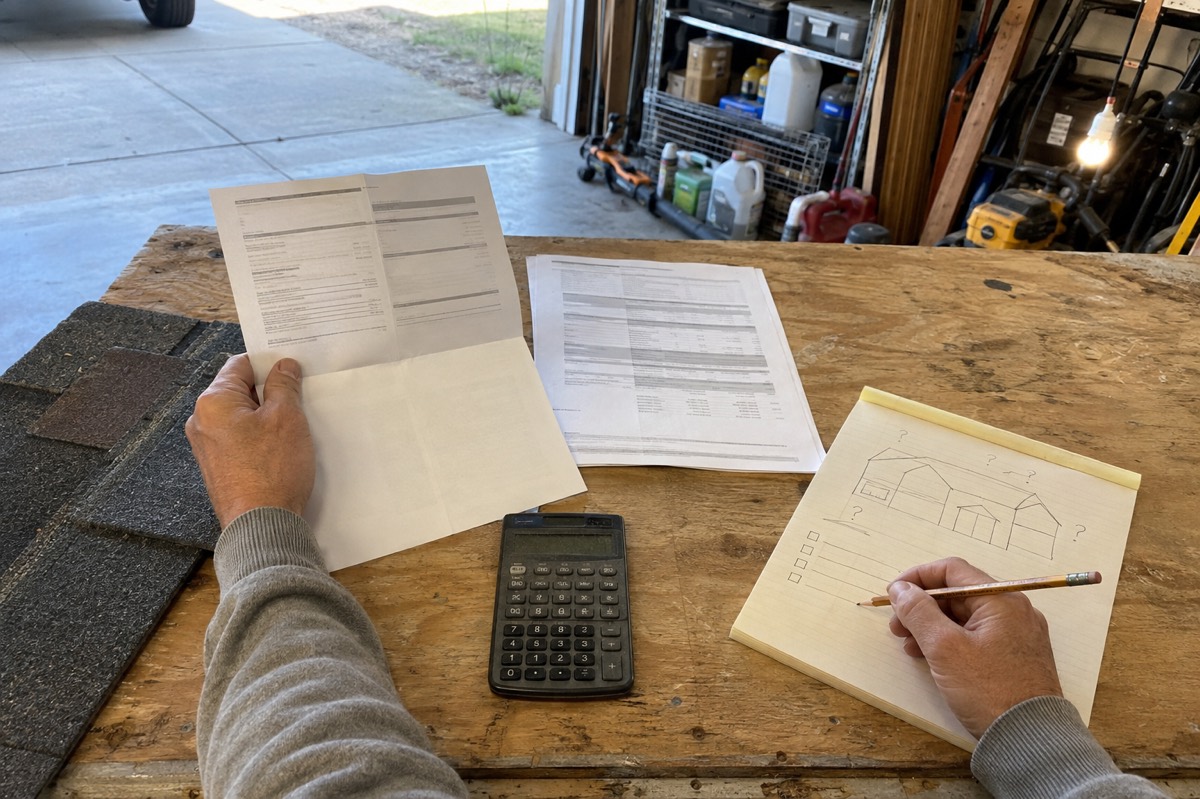
A roofing red flag is a reason to stop and check, not proof of a crime. Focus on facts you can verify: the business name, legal scope, written work plan, payment terms, and claim documents. A marked truck, local address, or polished website does not replace those checks.
1. Pressure to sign before you can check
Be wary of a price that is good only if you sign now. The FTC warns about high-pressure home repair sales and demands for full payment up front.
Ask for a written bid and time to read it. If a seller refuses, you can decline the offer. A real leak may need prompt safe work, but that does not require a rushed contract for a whole roof.
For storm damage, use our post-storm hiring guide. Keep temporary protection separate from the larger job so you know what each document authorizes.
2. Names or records that do not match
Get the business's legal name, contact address, and required license number. Compare them with the contract and official records. Ask about any trade name or separate crew.
An unmarked truck or home-based office alone does not prove bad work. The concern is a firm that will not identify itself or explain a mismatch.
Use our license check guide to find the right authority. Rules vary by state. Confirm current insurance through the agent rather than treating a license as proof of insurance.
3. A vague quote with a clear price
A firm price is not useful if the job is unclear. “Replace roof” leaves out product, removal, deck repair terms, flashing, permits, and cleanup.
Ask each bidder to fill the same gaps. Our roof quote guide gives you a line-by-line list. Get any added promise written into the bid.
A low price may reflect a different scope or business cost. It is not proof of a scam. But a seller who will not explain a major price gap leaves you unable to compare the offer.
4. Payments that ignore state rules
Do not assume that any deposit below half the price is safe. State limits may be much lower. California CSLB says a home improvement deposit is capped at $1,000 or 10% of the contract price, whichever is less.
Check the rule where your home is located. Then read what work or materials trigger each later payment. Avoid full payment before the job starts.
Get receipts and keep a payment record. If you have already signed and a dispute starts, seek contract-specific advice before withholding money. A red-flag list is not a legal right to stop payment.
5. Promises to control or guarantee a claim
A roofer can provide damage photos and a repair estimate. That is different from deciding what insurance covers or taking over policy rights.
Florida DFS says post-loss benefit assignments are barred for residential or commercial property policies issued or renewed on or after January 1, 2023. Other states and older policies need their own review.
Ask your insurer or a lawyer about any assignment of benefits, power of attorney, or similar form. Do not sign just because it is called routine paperwork. No roofing sales pitch can guarantee a covered loss or a payment amount.
6. No plan for permits or changes
Ask who gets required permits and schedules inspections. If the seller says none are needed, verify that with your local office. A product approval is not the same as approval for your job.
The contract should also explain change orders. Hidden damage may lead to extra work, but you need a clear price method and written consent. Blank price fields or “we will decide later” leave material terms unresolved.
7. Warranty promises with no written terms
“Lifetime” is a word, not a full warranty. Ask who backs it, which faults qualify, and what costs are excluded. Product cover and labor cover may be separate.
Get the written documents before choosing the bid. Ask how to reach the firm after the job and who handles a leak call. A local office helps with contact; it does not guarantee future service.
Keep a short list of open questions for each bidder. Resolve the material ones before signing. If key facts stay unclear, get another offer rather than filling the gaps with trust.
Quick answers
- Does a door-to-door roofing offer prove a scam?
- No. Verify the firm and offer. Pressure, blank contract terms, or facts that do not match are reasons to pause before you sign.
- Is a deposit below half the price always safe?
- No. State limits may be much lower. California caps home improvement deposits at $1,000 or 10% of the contract price, whichever is less.
- Can a roofer guarantee the insurer will pay?
- No. A roofer can document damage and price repairs, but the insurer decides coverage under the policy. Get advice before signing claim-rights documents.
Keep your home plan moving
Get the free Seasonal Home Maintenance Schedule
A seasonal checklist for your roof, gutters, HVAC and more, plus practical homeowner tips. Adjust the schedule for your climate and equipment.
We don't sell your email address. See our privacy policy.
Sources
- Avoid home improvement scams — Federal Trade Commission
- Assignment of benefits — Florida Department of Financial Services
- Deposit and payment rules — California Contractors State License Board