Home › Advice › Motorized Retractable Lanai Screens: A Buyer's Guide
Motorized Retractable Lanai Screens: A Buyer's Guide
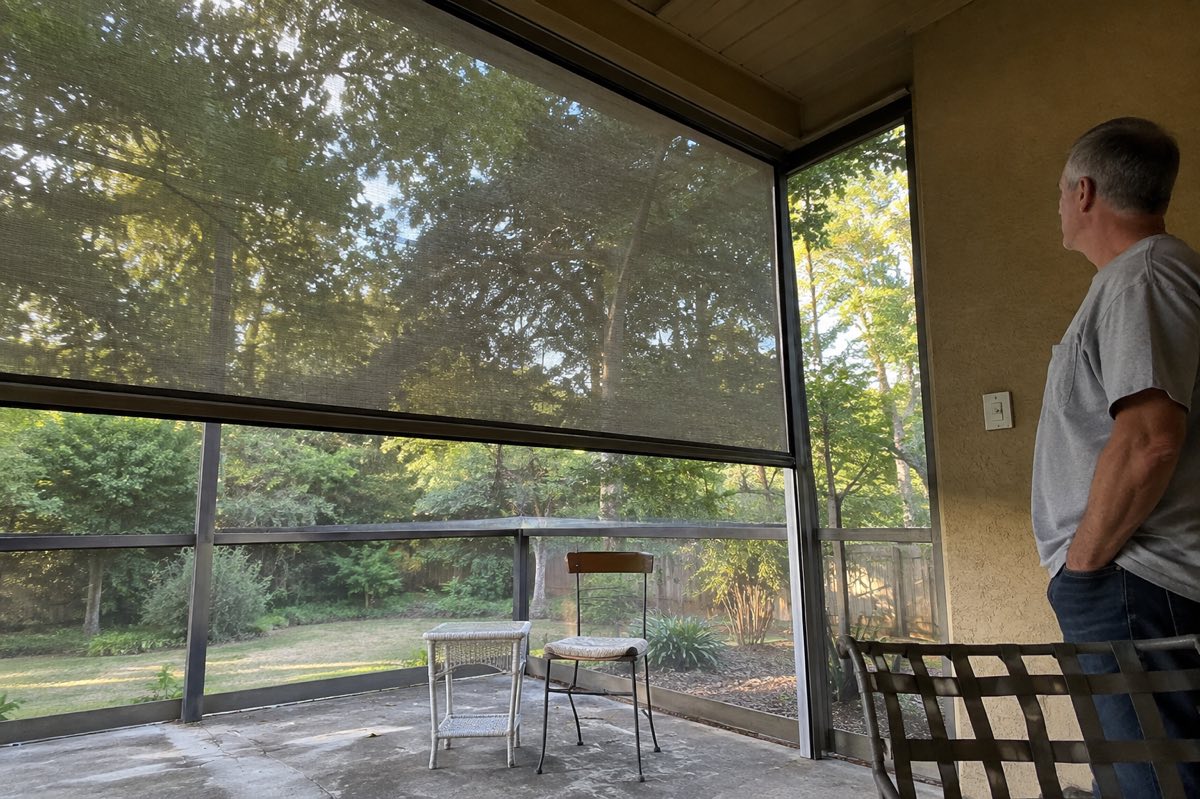
Buy a motorized patio screen for the problem you want it to solve. Bugs, glare, privacy, and storm debris are not the same job. Choose the mesh and track system first. Then check size limits, power, wind-use rules, and service terms for that exact model.
Choose the mesh for your main need
Ask to see a full-size sample in daylight. Look through it toward your yard. Check it again with lights on at night if privacy is a main goal. A sample lets you judge view and shade without relying on a brochure photo.
Tell the dealer which bugs bother you. Phantom Screens lists a fine no-see-um mesh apart from its standard insect mesh. So “insect screen” alone does not prove it stops those tiny bugs.
Get the fabric brand and model in writing. Ask for its open-area rating and care guide. A denser-looking mesh does not, by itself, prove a specific level of heat control or night privacy.
Check the tracks and opening size
Ask how the screen's side edges stay in place. Designs can use tracks, cables, or other retention parts. A zipper is one option, not a universal mark of the best system.
Have the dealer measure each opening. Ask for the maker's size limit for that fabric and model. Do not use a maximum shown for a different mesh as proof that yours will fit.
Request a sketch showing the housing, side parts, and bottom bar. Mark doors, handles, steps, and furniture. If a post or split screen is needed, see its location before you sign. Ask how the bottom edge meets an uneven floor and how gaps will be handled.
Keep storm claims separate
A shade screen is not a hurricane barrier just because it has strong tracks. Ask for the exact approval and its limits if storm protection is part of the pitch. Have the permit office confirm what applies to your opening.
Read our storm screen comparison before mixing those two uses. A product's test rating and its safe daily operating limits are different questions.
Get the maker's wind-use instructions. Ask when to raise or lower the screen before bad weather. Do not assume a loaded screen can be moved safely once winds are high. Follow the manual and keep people clear of moving parts.
Match the motor and power supply
Ask for the motor's name and model, not just “remote control included.” Confirm the power source and who will provide it. Some units are hardwired; plug-in models also exist. Somfy's Altus range includes a plug-in option.
For a battery or solar option, ask about charging, shade at the site, and access for service. Do not assume it suits every opening. Ask what happens in a power failure and whether that model has a manual release or backup.
List each control you expect: remote, wall switch, app, or sensor. Check which items need a hub or paid service. Ask the dealer to show basic use without a phone before handover.
Compare costs by opening and scope
GoRetractable's February 9, 2026 article gives a $3,000–$6,000 per-opening ballpark. It is a Florida supplier's planning range, not a national survey or a fixed installed offer for your home.
Ask each dealer to price the same openings and parts. Separate screens, motors, controls, labor, power work, and permits. Note any site repairs that are excluded. Do not multiply a broad range and treat the result as your quote.
Use our contract checklist to record the scope. Check the business through the license guide where the trade requires a license.
Plan for service before you buy
Get separate terms for fabric, motor, and labor. Ask who answers a service call and whether travel or removal costs are covered. Find out who will do the work if the seller uses another crew.
At handover, have the installer run each screen and show its stops. Keep the care guide and product labels. Follow that model's cleaning rules; do not use a generic chemical or pressure-wash routine. Report sticking, torn mesh, or unusual noise before continued use makes the fault worse.
Quick answers
- Will standard insect mesh keep out no-see-ums?
- Do not assume so. Ask for mesh made for those small bugs. Phantom lists a separate no-see-um mesh with smaller holes.
- Does a patio screen protect against hurricanes?
- Ordinary shade or insect mesh is not proof of storm protection. Check the exact product approval and site requirements for any storm claim.
- Does every screen motor need hardwiring?
- No. Power options vary; Somfy sells plug-in models too. Ask what your chosen system needs and who handles any electrical work.
Keep your home plan moving
Get the free Seasonal Home Maintenance Schedule
A seasonal checklist for your roof, gutters, HVAC and more, plus practical homeowner tips. Adjust the schedule for your climate and equipment.
We don't sell your email address. See our privacy policy.
Sources
- Insect mesh and no-see-um mesh — Phantom Screens
- Motorized screen product options — Phantom Screens
- Altus RTS plug-in motor — Somfy
- Motorized screen cost factors — GoRetractable