Home › Advice › Louvered Pergola Buying Guide: What to Check Before You Sign
Louvered Pergola Buying Guide: What to Check Before You Sign
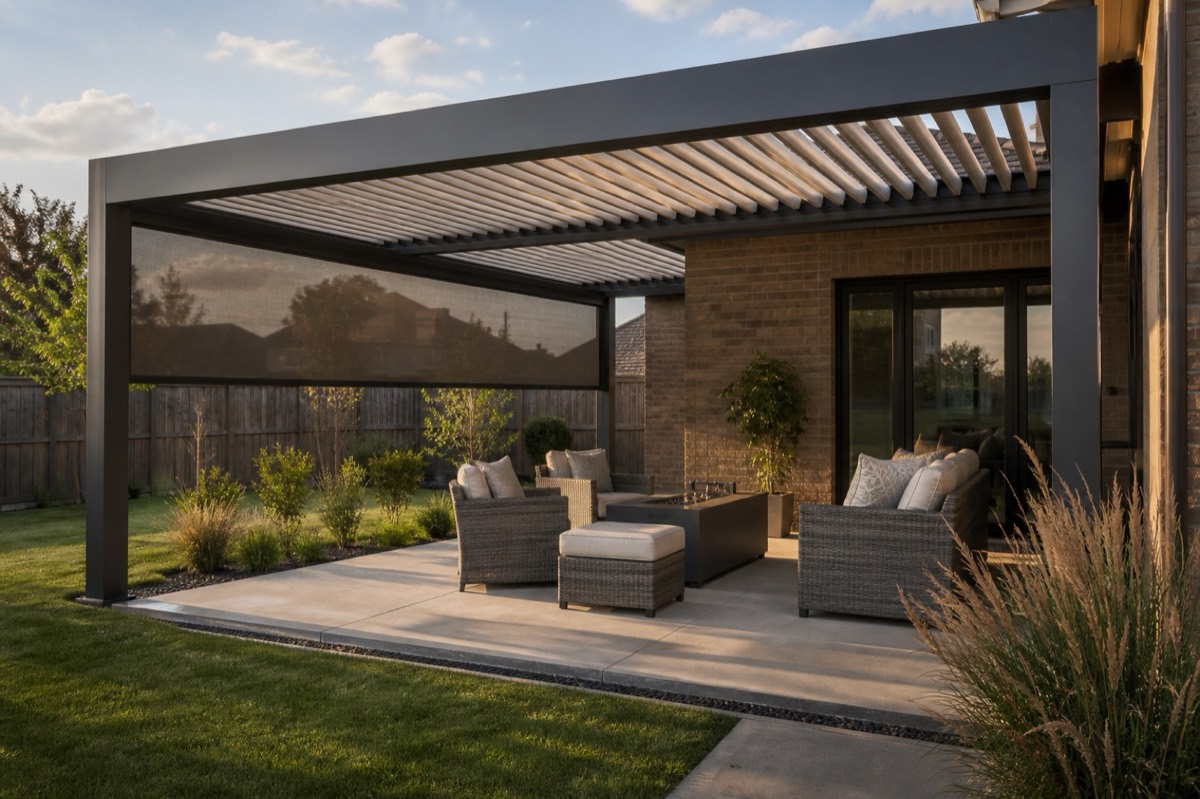
A louvered pergola has roof slats that tilt to change light and shade. Before you choose one, get a plan for the whole site, not just the frame. Check where posts go, where rain drains, how power reaches it, and what your local permit office requires.
Start with a measured plan
Draw the space you want to cover. Mark the house, paths, doors, steps, and nearby trees. Add the chairs or table you plan to use. Posts that look neat in a photo may block a path on your patio.
Ask the dealer for a drawing with clear sizes and heights. Check both open and closed roof positions. Note any parts that swing, slide, or need space for service.
Do not assume an existing slab can support the plan. Ask who will check the slab, footings, soil, and wind loads. Get any required design work into the bid. This is a site question, not a conclusion you can draw from the slab's looks.
Compare attached and freestanding plans
A freestanding frame and a house-attached frame can need different support details. Neither is always cheaper. The number of posts, type of anchors, and footing work depend on the design.
For an attached plan, ask where loads enter the house and how that joint keeps out water. For a freestanding plan, ask how each post is secured. Let the designer specify the details rather than assuming every job needs the same ledger or post count.
Ask who repairs paving, walls, or finishes disturbed by the work. Those costs can be missed when one quote covers only the pergola kit.
Follow the rain to its exit
Ask the seller to show the water path on the drawing. Where does rain go when the louvers close? Where does each gutter drain? Will water spill onto a step, pool edge, or a neighbor's land?
Get the model's limits for wind-driven rain and side splash. A rain-shedding roof is not proof that cushions or a floor will stay dry in every storm. Ask what the written warranty actually promises.
Make sure drains and roof parts can be reached for care. Do not climb onto the louvers yourself. Our gutter and downspout guide offers a ground-level way to think about runoff.
Check power and bad-weather use
List lights, fans, heaters, screens, and outlets you want. Ask for the load and power plan, including any separate trade work. Decide what is included now and what would cost more later.
Ask what happens when power fails. Can the louvers move by hand? Is backup power offered for that model? Get the safe wind and snow-use instructions, not just a sales claim about frame strength.
If screens are part of the plan, check their own limits too. Our motorized screen guide covers fabric, tracks, and motor questions. The frame's rating does not answer every question about an added screen.
Read prices in their proper context
HomeGuide's StruXure article, dated May 3, 2024, cites $150–$200 per square foot installed. That is a publisher's estimate for one brand. It is not a verified 2026 quote for all louvered pergolas.
StruXure's own cost page discusses custom choices and site factors. We have not verified a fixed price from the maker for your size and layout. Use a dealer's written site quote, not an assumed price from a photo.
Get written bids with size, model, finish, supports, drainage, power, and labor named. Put screens and other options on separate lines. Compare the same design before comparing the totals.
Confirm permits and the contract
Take the proposed plan to the local permit office, or have the contractor confirm the rules in writing. Check building, electrical, setback, and association rules that apply to your site. Do not assume a product brochure is a permit approval.
Name who gets the permits and who schedules required checks. Ask what happens if the approved design differs from the bid. A change needs a clear price and written consent.
Use our contract checklist before paying a deposit. Keep the final drawing, care guide, and warranty with the signed contract. The useful outcome is a buildable plan with clear duties, not the most options in a sales package.
Quick answers
- Will closed louvers make a waterproof room?
- Do not assume so. Ask how the exact model handles rain, side splash, wind-driven rain, and drainage. Get any promise in writing.
- Does a louvered pergola need a permit?
- Ask your local permit office about your plan. Size, location, attachment, and power work can affect what approvals are needed.
- Is there a fixed price for a 12-by-16 pergola?
- No verified fixed price is offered here. Ask for a site-specific bid with the brand, frame, footing work, power, and options listed.
Keep your home plan moving
Get the free Seasonal Home Maintenance Schedule
A seasonal checklist for your roof, gutters, HVAC and more, plus practical homeowner tips. Adjust the schedule for your climate and equipment.
We don't sell your email address. See our privacy policy.
Sources
- StruXure pergola cost factors — StruXure
- StruXure installed price examples — HomeGuide
- Avoid home improvement scams — Federal Trade Commission